
Decoding Pet Food Labels: Nutrients, Ingredients, and What to Look For

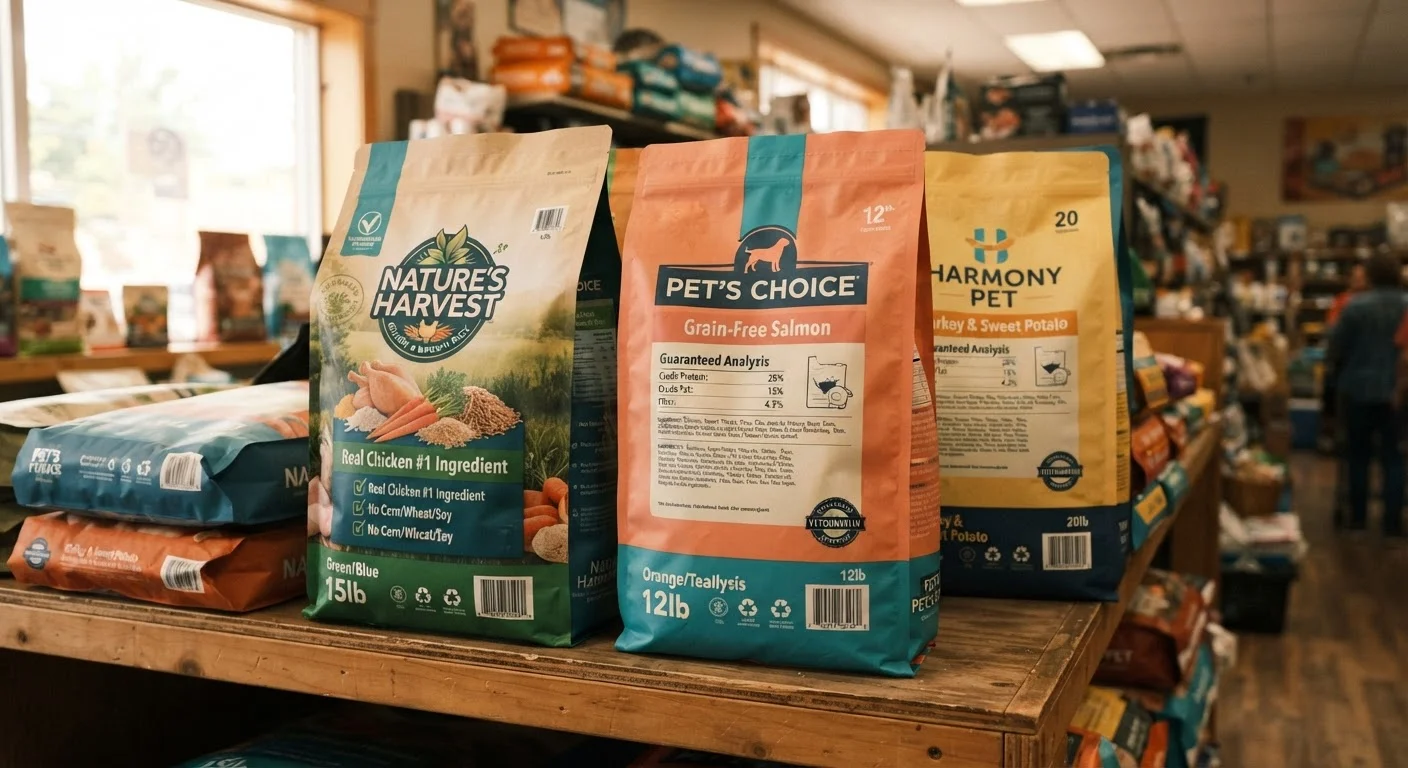
Photo: InfoAlly.net | Finding Info Made Easy editorial
Why Pet Food Labels Matter More Than You Think
Standing in the pet food aisle, surrounded by bold claims like "premium," "natural," and "wholesome," it can feel impossible to separate marketing from meaningful nutrition. The good news: pet food packaging in the United States is regulated, and the label itself contains structured, standardized information - if you know where to look.
In the U.S., pet food labeling is governed primarily by the AAFCO (Association of American Feed Control Officials), which sets definitions, ingredient naming conventions, and nutritional standards. The FDA also has oversight authority. Together, these frameworks mean that certain parts of a pet food label carry specific, legally defined meanings - while others, like "premium" or "gourmet," have no regulatory definition at all.
Learning to read these labels is one of the most practical things you can do for your pet's long-term wellbeing. For a broader look at how feeding choices affect health outcomes, see our article on common feeding errors.
| U.S. Regulatory Body | FDA, with AAFCO model guidelines adopted by most states |
| Ingredient List Order | Descending by pre-cooking weight (AAFCO labeling requirements) |
| Life Stages Recognized | Growth, adult maintenance, reproduction, all life stages (AAFCO Dog and Cat Food Nutrient Profiles) |
| "Premium" Label Claim | No regulatory definition - marketing term only (FDA Pet Food Labeling Overview) |
| Moisture in Wet Pet Food | Typically 75-80% (General industry standard range) |
| Substantiation Methods | Formulation-based or AAFCO feeding trial (AAFCO Official Publication) |
Decoding the Ingredient List
Ingredients are listed in descending order by pre-cooking weight. That means a food listing "chicken" first contained more chicken by weight - before moisture was cooked off - than any other single ingredient. This matters because meat is largely water; after processing, it may represent a smaller proportion of the final product than it appears.
Here are a few key things to watch for:
- Named protein sources - "Chicken," "salmon," or "lamb" are more specific (and informative) than generic terms like "meat" or "poultry."
- Ingredient splitting - A manufacturer might list "ground corn," "corn gluten meal," and "corn flour" separately. Combined, corn could outweigh the named meat protein, even though each corn derivative appears lower on the list individually.
- By-products - Terms like "chicken by-product meal" refer to rendered parts other than skeletal muscle. AAFCO-defined by-products can include organs and are not inherently low-quality, though their nutritional consistency varies.
- Preservatives - Mixed tocopherols (a form of vitamin E) are commonly used natural preservatives. Synthetic options like BHA and BHT are also permitted; their long-term effects at dietary levels are an area of ongoing research.
If you're accustomed to reading ingredient labels on human food products, our guide to cutting through food label marketing offers useful parallel skills.
AAFCO
The Association of American Feed Control Officials, a voluntary membership organization that establishes model regulations and nutritional standards for animal feeds and pet food in the U.S. Many states adopt AAFCO guidelines as law.
Guaranteed Analysis
A required label panel showing minimum crude protein and fat percentages, and maximum crude fiber and moisture percentages. These are chemical measurement minimums and maximums, not precise nutritional profiles.
Dry Matter Basis
A method of comparing pet food nutrients after mathematically removing all moisture content. It allows meaningful comparisons between wet and dry foods, which otherwise have very different moisture levels.
Nutritional Adequacy Statement
A required label statement indicating whether a food is complete and balanced for a specific life stage, and whether that was verified by formulation or by feeding trials. Also called the AAFCO statement.
By-product Meal
A rendered, dried ingredient made from animal parts other than skeletal muscle meat. AAFCO defines which parts are permitted; by-products can include organs and are a concentrated protein source, though quality varies by manufacturer.
Ingredient Splitting
A labeling practice where a single ingredient (such as corn) is listed as multiple sub-forms (corn flour, ground corn, corn gluten) so each appears lower on the list, potentially obscuring that ingredient's overall proportion in the recipe.
The Nutritional Adequacy Statement - The Most Important Line on the Bag
Often called the "AAFCO statement," the nutritional adequacy statement tells you whether a food is designed to be complete and balanced - or just a supplement or treat. It appears in small print, typically near the guaranteed analysis panel, and it does a lot of heavy lifting.
A compliant statement will say something like: " is formulated to meet the nutritional levels established by the AAFCO Food Nutrient Profiles for ."
Two things to check in this statement:
- Life stage - Look for "all life stages," "adult maintenance," "growth" (puppies/kittens), or "reproduction." A food labeled only for "adult maintenance" is not optimized for a growing puppy or a pregnant cat.
- Method of substantiation - "Formulated to meet" means the recipe was designed to hit nutrient targets on paper. "Animal feeding tests" means it was tested on live animals using AAFCO protocols, which some veterinary nutritionists consider a higher bar - though neither method is a guarantee of real-world performance.
"Intermittent Feeding" Labels Signal Incompleteness
Foods labeled "for supplemental or intermittent feeding only" are not nutritionally complete and should not be a pet's sole diet. This phrasing is easy to miss but critically important.
Guaranteed Analysis and What the Numbers Actually Mean
The guaranteed analysis panel lists minimum percentages of crude protein and crude fat, and maximum percentages of crude fiber and moisture. "Crude" is a laboratory measurement method - it doesn't directly indicate digestibility or bioavailability. A food can meet crude protein minimums while delivering protein the animal can't efficiently use.
One commonly misunderstood issue is comparing wet and dry foods on an "as-fed" basis. Wet food may show only 8-10% protein, while dry kibble shows 28-30% - but wet food is roughly 75-80% moisture. Converting both to a dry matter basis (removing moisture from the calculation) gives a more accurate comparison. Your veterinarian or a board-certified veterinary nutritionist can help interpret these numbers in context of your specific pet's needs.
For a deeper look at how kibble and wet food differ beyond the label, see our dry food vs. wet food comparison.
75-80%
Moisture content in typical wet pet food
This is why comparing wet and dry food protein percentages at face value can be misleading - dry matter conversion is required for accuracy.
2 methods
Ways a food can claim AAFCO compliance
Formulation testing and live animal feeding trials are both accepted by AAFCO, though they represent different levels of real-world validation.
This article provides general educational information about pet food labeling and is not a substitute for personalized veterinary guidance. Always consult a licensed veterinarian or board-certified veterinary nutritionist for advice tailored to your pet's individual health needs.
The content on this site is for informational purposes only and is not a substitute for professional advice. Always consult a qualified professional for guidance specific to your situation.