
Durability Signals Worth Looking for Before You Buy Clothing

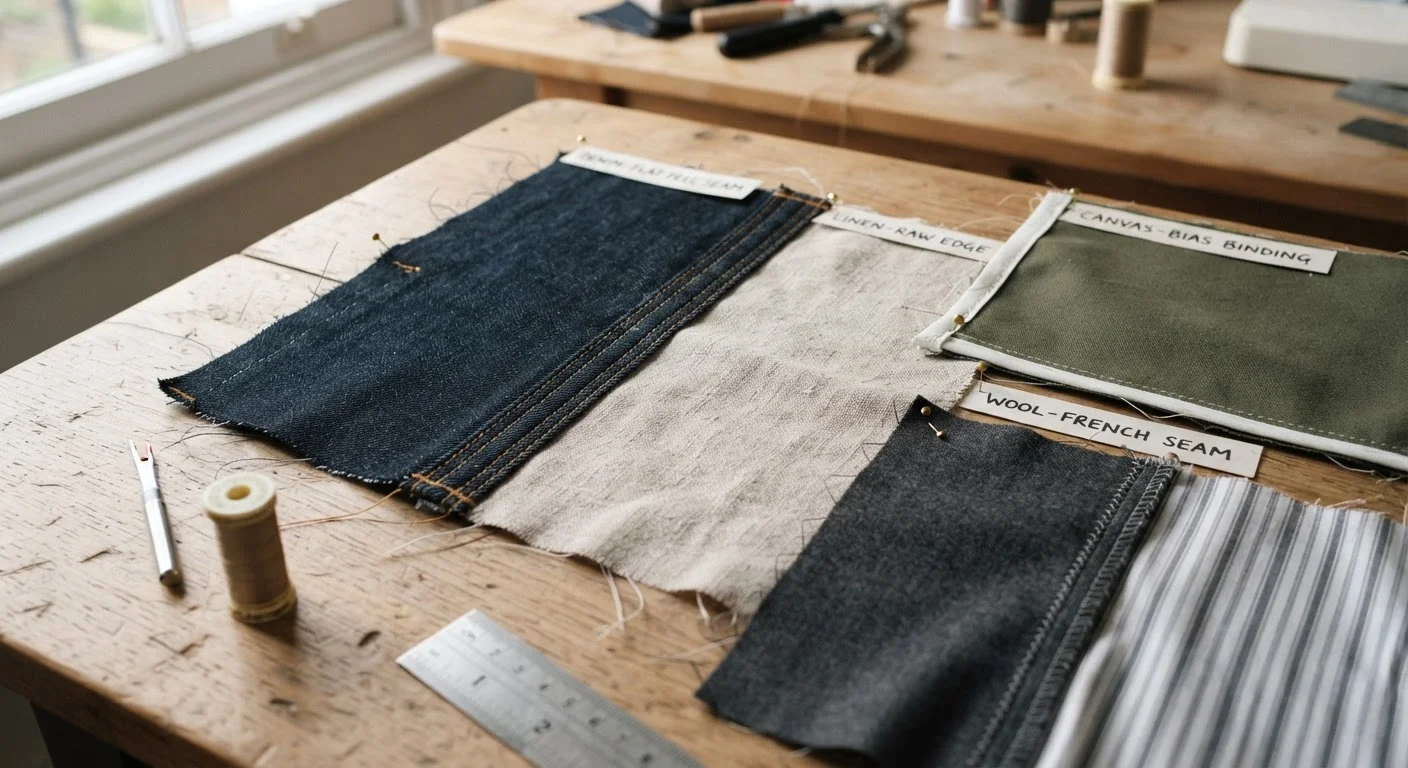
Photo: InfoAlly.net | Finding Info Made Easy editorial
Why Fabric and Construction Beat Price as Durability Predictors
A garment's price tag is a poor guide to how long it will last. Markup varies wildly based on branding, retail channel, and trend positioning - none of which affect how a seam holds up after 50 washes. The signals that actually predict longevity are in the fabric composition and the way the garment is put together. Learning to read them takes a few minutes at the rack and pays off every time you buy.
This connects to a broader principle covered in our guide to price versus value: the cheapest option and the most expensive option often share the same flaw - neither is evaluated on actual performance. Clothing is one of the clearest examples of this gap.
| Most predictive label | Fiber content (care label inside garment) |
| Optimal stitch density | 8-12 stitches per inch for woven fabric (General tailoring industry standard) |
| Recommended seam allowance | Approximately ½ inch or wider |
| Key stress-point feature | Bar tacks at pockets, loops, and crotch seams |
| Quick pilling test | Rub two fabric layers together firmly at point of sale |
| Hardware longevity | Metal zippers and sewn buttons outlast plastic and glued alternatives |
Fabric Signals: What to Check on the Care Label
The fiber content label is the single most informative tag on any garment. Here is what the common entries tell you:
- Natural fibers with tight weaves - 100% cotton, linen, wool, and silk breathe well and tend to age gracefully. Look for a dense weave you cannot easily see through when held to light.
- High-quality blends - A small percentage of synthetic fiber (5-15%) added to natural fiber often improves shape retention and reduces shrinkage without sacrificing feel. Larger synthetic percentages can signal cost-cutting.
- Percentage matters - A label reading "60% polyester, 40% cotton" is a different product from "60% cotton, 40% polyester," even if they look identical on the hanger. The dominant fiber drives the garment's long-term behavior.
- Pilling tendency - Loosely spun fibers - common in budget acrylic and low-grade wool - pill quickly. Rub two layers of the fabric together firmly; if tiny balls form immediately, expect the same at home.
For a deeper look at how fiber choices affect your overall wardrobe, see Fabric, Fit, and Finish.
Seam Allowance
The strip of fabric between a seam's stitching line and the raw cut edge. A wider seam allowance makes a garment easier to repair and more durable at stress points.
Bar Tack
A cluster of dense, closely spaced stitches applied at high-stress points like pocket corners and belt loops. Indicates intentional reinforcement against tearing.
Pilling
The formation of small fiber balls on the surface of fabric caused by friction. It is most common in loosely spun or low-grade synthetic fibers and is a sign of reduced fabric longevity.
Fiber Content Label
The legally required tag on garments sold in the US that lists fabric composition by percentage. It is the most reliable starting point for assessing fabric quality and care requirements.
Stitch Density
The number of stitches per inch along a seam. Higher stitch density generally produces a stronger, more abrasion-resistant seam that is less prone to unraveling.
Construction Signals: Five Things to Inspect Before Purchase
Even excellent fabric fails if construction is weak. These five checks take under two minutes:
- Stitch density - Count stitches per inch on a visible seam. Tighter stitching (roughly 8-12 stitches per inch for woven fabric) resists unraveling better than widely spaced stitching.
- Seam allowance - Turn the garment inside out. A wider seam allowance (about half an inch) means the seam can be repaired or let out; a narrow one leaves little margin for either.
- Reinforcement at stress points - Check pocket openings, button attachments, and crotch seams. Bar tacks (small dense stitching clusters) at these points indicate the manufacturer anticipated wear.
- Pattern matching - On stripes or checks, do the lines align at the side seams? Mismatched patterns suggest rushed production and are a proxy for overall quality control.
- Hardware and closures - Tug buttons gently. A button that rotates loosely or feels glued rather than sewn will likely detach within weeks. Metal zipper pulls generally outlast plastic ones.
These construction principles pair well with the framework in Long-Term Ownership vs. Short-Term Satisfaction - evaluating the reality of ownership before the purchase rather than after.
~73%
Consumers who report buying clothing more often than needed
According to a 2023 survey by ThredUp's Fashion Resale Report, a majority of US consumers acknowledge buying more clothing than they use.
3-4×
Lifespan difference between well-constructed and fast-fashion garments
Industry analysis from sustainability researchers suggests well-constructed garments can last several times longer than low-construction equivalents under the same care conditions.
Putting It Together: A Practical Shopping Habit
Durability checks do not require expertise - they require attention. Before adding any garment to your cart or basket, run through the label, hold the fabric to light, rub the surface, flip it inside out, and pull on a button. This two-minute habit shifts your evaluation from aesthetics alone to actual expected lifespan.
Combined with a wardrobe built around your real life, buying fewer, longer-lasting garments consistently delivers more value per dollar than chasing trend-driven volumes. The goal is not to spend more - it is to spend more deliberately.
This article is for general informational purposes only. Product durability can vary based on usage, care practices, and individual manufacturing variation. These signals are guidelines, not guarantees.
The content on this site is for informational purposes only and is not a substitute for professional advice. Always consult a qualified professional for guidance specific to your situation.