
Capsule Wardrobe vs. Full Wardrobe: Which Approach Suits You?

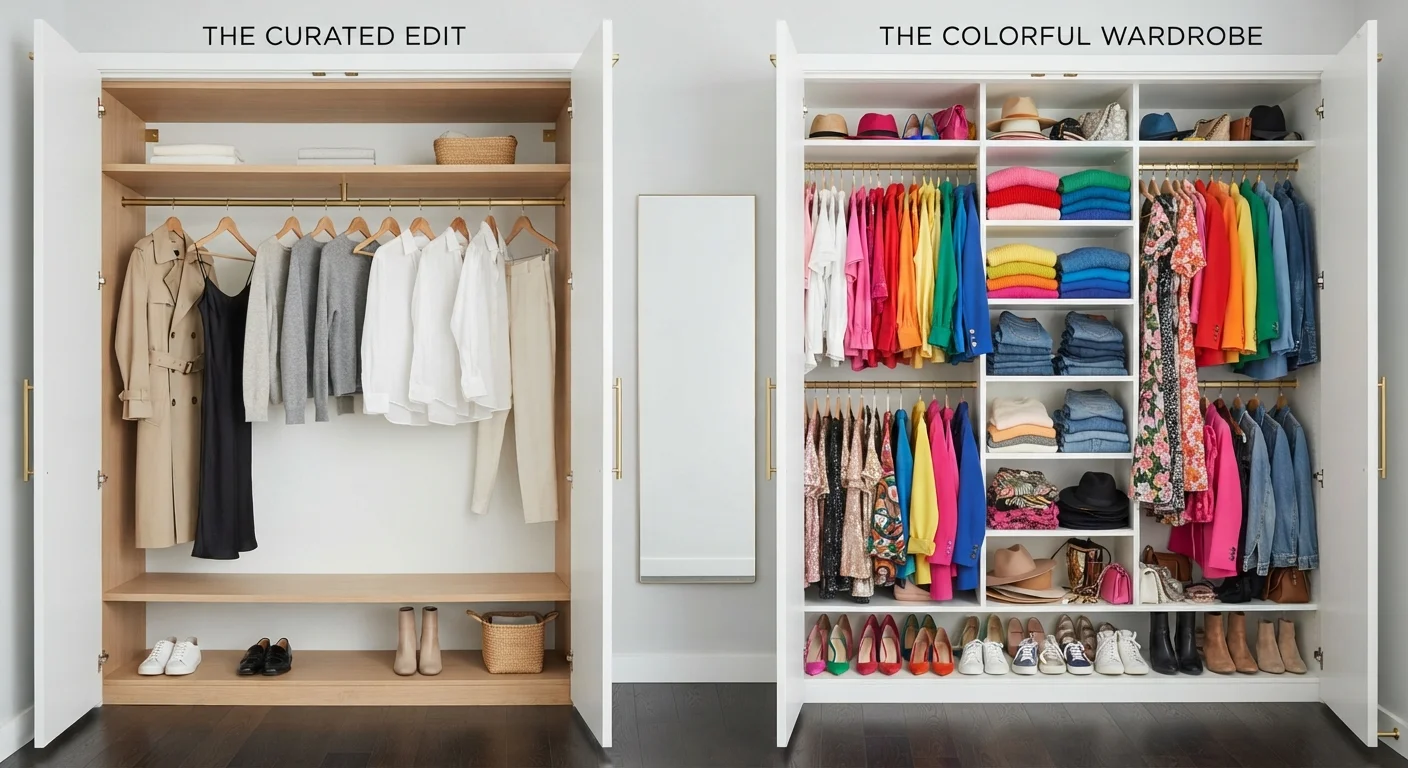
Photo: InfoAlly.net | Finding Info Made Easy editorial
Key Takeaways
- A capsule wardrobe prioritizes versatility with a curated set of 30-50 interchangeable pieces.
- A full wardrobe supports varied occasions, trends, and personal expression without strict limits.
- Neither approach is objectively superior - the best fit depends on your lifestyle and values.
- Capsule wardrobes often reduce decision fatigue and can lower long-term clothing spend.
- Full wardrobes offer flexibility but require more organization and intentional editing over time.
What Each Wardrobe Philosophy Actually Means
The term capsule wardrobe was popularized in the 1970s by London boutique owner Susie Faux, who advocated for a small collection of timeless, interchangeable essentials supplemented seasonally. Today, most definitions hover around 30-50 carefully chosen pieces - think neutral blazers, well-fitting trousers, and versatile footwear that mix and match effortlessly.
A full wardrobe, by contrast, isn't defined by volume alone - it's defined by intention toward variety. It includes pieces for specific moods, occasions, trends, and seasons without an enforced ceiling on quantity. The goal isn't accumulation for its own sake but rather a collection broad enough to support a multifaceted life.
Both philosophies are responses to the same underlying question: How do I make getting dressed feel good and work for my real life? They just answer it very differently. For a deeper look at how to align your closet with your actual day-to-day, see our practical wardrobe guide.
The Core Trade-Offs at a Glance
Understanding the structural differences between these two approaches makes it much easier to identify which one genuinely fits your life - not just which one sounds appealing in theory.
| Criterion | Capsule Wardrobe | Full Wardrobe |
|---|---|---|
| Typical piece count | 30-50 core items | No defined limit |
| Getting-dressed ease | High - everything coordinates | Variable - more choices to navigate |
| Style variety | Limited by design | High - supports many aesthetics |
| Occasion flexibility | Moderate - relies on versatile pieces | High - dedicated pieces per context |
| Upfront cost | Higher per item (quality focus) | Varies widely by buying habits |
| Storage demands | Low - compact by design | Higher - requires more space |
| Trend participation | Minimal - timeless focus | Easy to incorporate new trends |
| Environmental impact | Generally lower consumption | Depends on purchasing habits |
Notice that neither column is a clear winner. The capsule approach shines on simplicity and consistency; the full wardrobe shines on versatility and creative range. Your lifestyle determines which trade-offs matter most.
The Case for Going Capsule
Decision fatigue is real. Studies in behavioral psychology consistently show that the more choices we face, the more mental energy we spend - and wardrobe decisions are no exception. A capsule wardrobe reduces that load by design: when every piece coordinates with every other piece, putting together an outfit becomes nearly effortless.
The capsule approach also tends to shift spending habits. Instead of buying many lower-cost items across the year, capsule devotees typically invest in fewer, more durable pieces. Over time, this can mean less textile waste and a wardrobe that actually holds its shape and color through years of wear.
80%
Clothes worn only 20% of the time
The Pareto principle is frequently cited in wardrobe studies suggesting most people regularly wear only a small fraction of what they own.
~$1,700
Average annual US clothing spend
According to the U.S. Bureau of Labor Statistics Consumer Expenditure Survey, American households spend roughly this amount on apparel and related services each year.
Capsule dressing also supports a clearer personal aesthetic. When you're forced to define your style down to its essentials, you get sharper about what you actually love to wear - and what you'd been keeping out of obligation or impulse. If you want to audit your current closet with that lens, our structured wardrobe audit is a great starting point.
The Case for a Fuller Closet
For many people, clothing is a genuine form of self-expression - and limiting a wardrobe to 35 neutral pieces can feel more restrictive than freeing. If you genuinely enjoy engaging with seasonal trends, experimenting with color, or dressing differently for different moods, a full wardrobe isn't indulgence - it's function.
A full wardrobe is also more practical for complex lifestyles. Someone who shifts between corporate meetings, weekend hiking, formal events, and casual brunches in a single week will likely find a strict capsule insufficient without constant re-wearing or outfit gymnastics. Variety, in that case, is a practical tool.
The key distinction between a thoughtful full wardrobe and a chaotic overstuffed closet is intentional editing. A well-managed full wardrobe still gets reviewed seasonally - items that haven't been worn in over a year are reassessed, and new purchases are considered against what already exists. Curious how the two philosophies stack up against trend-driven dressing? Our piece on capsule vs. trend-driven closets explores that tension in depth.
A Full Wardrobe Isn't the Same as a Cluttered One
How to Find Your Own Answer
Before committing to either approach, it helps to get honest about a few things: How many distinct contexts do you dress for each week? How much do you enjoy the process of getting dressed - is it a creative ritual or a daily chore? What's your storage reality? And how aligned is your current wardrobe with clothes you actually reach for?
Many people land somewhere between the two poles - a semi-capsule built around a reliable core of versatile pieces, with deliberate additions for specific occasions or seasonal expression. That hybrid approach works well for people who want simplicity on weekdays but flexibility on weekends. For guidance on bridging different dressing contexts, see our article on occasion dressing vs. everyday style.
The most important principle either way: build a wardrobe that reflects your real life, not a curated version of someone else's aesthetic on social media. Confidence in what you wear comes from alignment - between your clothes, your occasions, and your sense of self.
The content on this site is for informational purposes only and is not a substitute for professional advice. Always consult a qualified professional for guidance specific to your situation.