
A Practical Glossary of Terms You'll See on Gadget Packaging

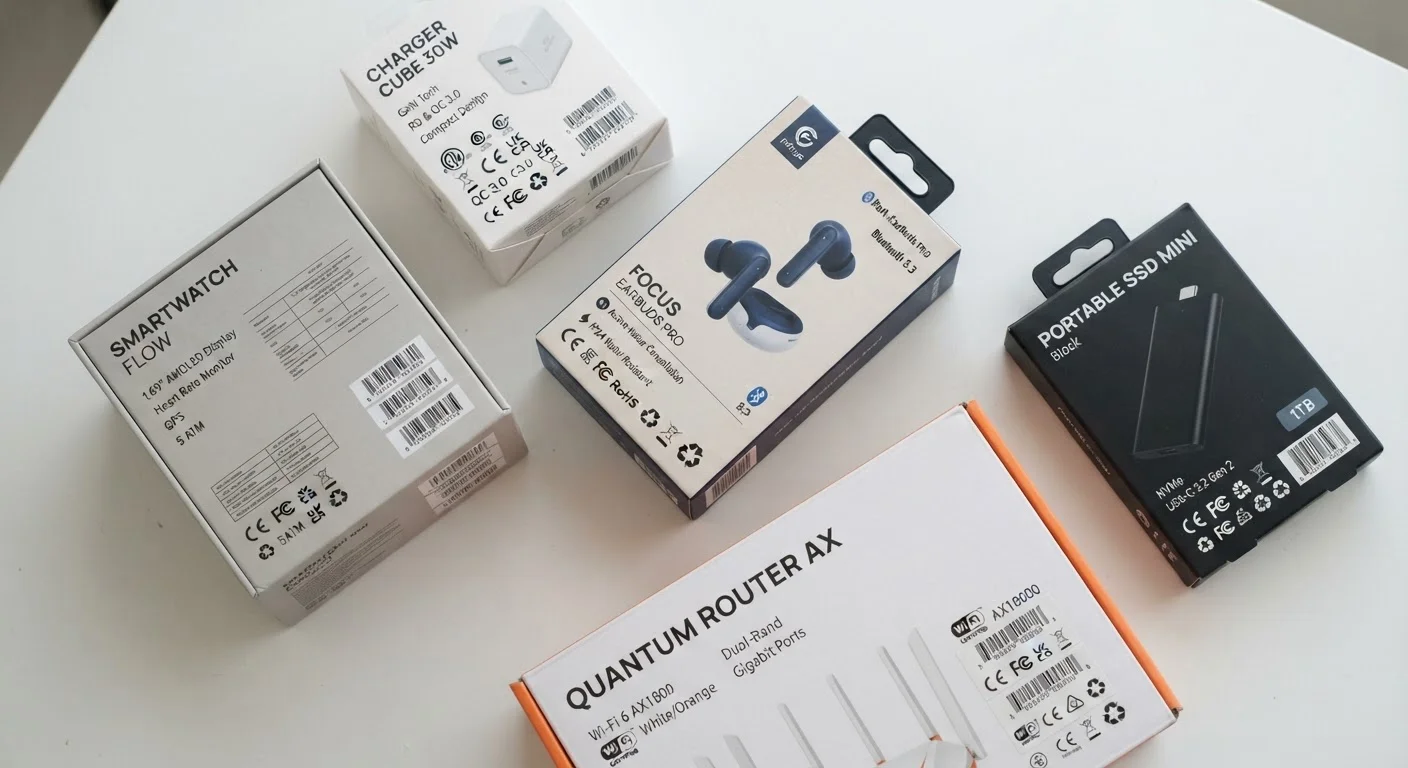
Photo: InfoAlly.net | Finding Info Made Easy editorial
Why Packaging Labels Can Feel Like a Foreign Language
Pick up any gadget box - a pair of wireless earbuds, a portable charger, a smartwatch - and you'll find a wall of abbreviations: IP68, USB-C PD, Bluetooth 5.3, mAh. These aren't just marketing decoration. Each term describes something real about how the device performs in daily life. Understanding them helps you set accurate expectations before you ever open the box.
This glossary focuses on the labels that appear most frequently across general consumer devices - not just smartphones. For phone-specific specs like RAM, refresh rate, and aperture, see our smartphone specs glossary. And if you want to understand how to weigh these numbers against each other when making a decision, reading a spec sheet without getting lost is a useful companion.
IP Rating
A two-digit code (e.g., IP67) that describes a device's resistance to solids (first digit) and liquids (second digit). Higher numbers indicate greater protection.
USB-C PD
USB Power Delivery - a charging standard that allows a USB-C port to negotiate higher wattages with a compatible charger. Enables significantly faster charging than older standards.
mAh
Milliampere-hour - a unit measuring battery capacity. A higher mAh value means the battery can store more energy, generally supporting longer use before recharging is needed.
Bluetooth Version
A number indicating which generation of the Bluetooth wireless standard a device supports. Newer versions typically offer improved connection stability, efficiency, and battery performance.
Wi-Fi 6 (802.11ax)
The sixth generation of Wi-Fi technology. It handles multiple simultaneous device connections more efficiently and reduces congestion in dense network environments.
FCC Mark
A US Federal Communications Commission authorization indicating a wireless device has been tested and approved for operation on regulated radio frequencies in the United States.
UL Listed
Certification from Underwriters Laboratories indicating a product has been independently tested against established electrical safety standards. Common on chargers and power accessories.
Energy Star
A US EPA program designating products that meet energy efficiency benchmarks, meaning they consume less electricity in normal or standby operation than the regulatory minimum.
RoHS
Restriction of Hazardous Substances - a compliance standard limiting the use of specific toxic materials (such as lead and cadmium) in electronic components. Required in the EU and widely adopted globally.
Watt (W) / Wattage
A measure of electrical power. In the context of charging, wattage indicates how quickly a charger can transfer energy to a device - higher wattage generally means faster charging when both device and charger support it.
The Terms That Come Up Most Often
Below are the categories of labels you're most likely to encounter, with plain explanations of what each one signals about everyday use.
| IP67 liquid resistance | Up to 1 meter, 30 minutes (IEC 60529 standard definition) |
| IP68 liquid resistance | Deeper/longer - manufacturer-specified (IEC 60529 standard definition) |
| USB-C PD maximum common wattage | Up to 240W (USB PD 3.1) (USB Implementers Forum specification) |
| Bluetooth 5.0+ range (open air) | Up to ~800 feet theoretical (Bluetooth SIG specification; real-world range varies significantly) |
| Energy Star adoption | 75+ product categories covered (US EPA Energy Star program) |
| Wi-Fi 6 vs. Wi-Fi 5 efficiency | Up to 4× more capacity in dense environments (Wi-Fi Alliance technical documentation) |
Connectivity Labels
Bluetooth versions (e.g., 5.3) indicate how efficiently a device communicates wirelessly. Higher version numbers generally mean more stable connections, lower battery drain, and better performance in crowded environments like offices or transit - not necessarily greater range.
Wi-Fi standards such as Wi-Fi 6 (802.11ax) describe wireless internet capability. A device supporting a newer standard can handle more simultaneous data streams more efficiently, which matters most in homes with many connected devices.
Charging and Power Labels
USB-C PD (Power Delivery) means the port supports faster, negotiated charging - the device and charger communicate to deliver the safest maximum wattage. A higher wattage number (e.g., 45W vs. 18W) means faster charging, but only when paired with a compatible charger.
mAh (milliampere-hour) measures battery capacity. A larger number means more stored energy - roughly translating to longer use between charges - though actual battery life also depends heavily on what the device is doing.
Durability Ratings
The IP rating (Ingress Protection) is a two-digit code. The first digit rates solid particle resistance (dust, debris); the second rates liquid resistance. IP67 means dust-tight and can withstand submersion up to 1 meter for 30 minutes. IP68 allows deeper or longer submersion as specified by the manufacturer. Neither rating covers pressurized water like a shower jet. For wearables, these ratings matter a great deal - see our wearable technology guide for how IP ratings apply to fitness trackers and smartwatches.
IP Ratings Don't Cover Every Water Scenario
Certification Marks and What They Guarantee
Logos and certification marks carry legal weight - they aren't just design elements.
- FCC Mark (US): The device has been tested and authorized for use on the radio frequency spectrum in the United States. Required for any device that transmits wirelessly.
- UL Listed / UL Certified: An independent safety organization (Underwriters Laboratories) has tested the product against recognized safety standards. Common on chargers, power strips, and appliances.
- Energy Star: A US EPA program. Devices carrying this mark meet efficiency benchmarks, meaning they use less energy in standby or active modes compared to the minimum required by regulation.
- RoHS: Restriction of Hazardous Substances. Indicates the product limits certain toxic materials (like lead and mercury) in its components - an environmental and safety standard required for sale in the EU and adopted broadly worldwide.
Understanding what these marks do - and don't - guarantee helps you interpret packaging more honestly. A UL mark on a charger, for instance, addresses electrical safety, not charging speed or compatibility. For a broader look at how quality signals vary by product type, what quality actually means across product categories breaks this down clearly.
If you're exploring how all of these terms apply to an entire device ecosystem - phones, smartwatches, earbuds - our phones and wearables overview covers the full picture.
The content on this site is for informational purposes only and is not a substitute for professional advice. Always consult a qualified professional for guidance specific to your situation.