
Wired vs. Wireless Earbuds for Everyday Use

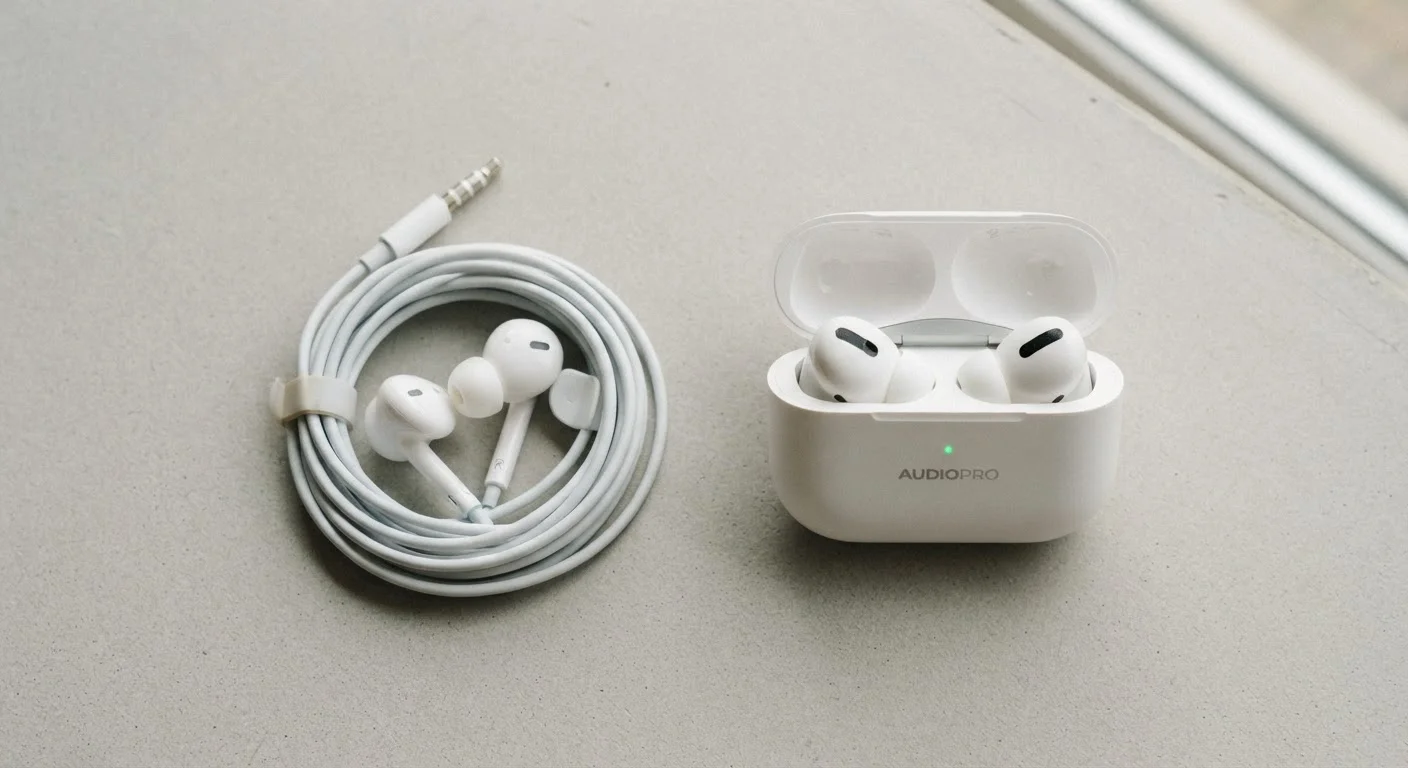
Photo: InfoAlly.net | Finding Info Made Easy editorial
Key Takeaways
- Wired earbuds never need charging and tend to deliver stable audio quality at lower price points.
- Wireless earbuds eliminate cable tangles and suit active routines, but require regular recharging.
- Battery life for wireless models typically ranges from 5 to 10 hours per charge, with cases adding more.
- Wired options depend on a headphone jack, which many modern phones no longer include.
- Your daily habits - commuting, working out, desk work - should drive the decision more than specs.
The Core Difference: What You're Actually Choosing Between
Wired earbuds connect directly to your device through a physical cable - typically via a 3.5mm headphone jack or a USB-C port. Wireless earbuds use Bluetooth to transmit audio from your phone or tablet without any cord. That single distinction ripples out into nearly every aspect of daily use: how you put them on, how long you can use them, and what happens when something goes wrong.
If you're newer to wearable audio and want broader context on how these devices fit into modern life, the Everyday Consumer's Introduction to Wearable Technology is a useful starting point before diving into the comparison.
| Criterion | Wired Earbuds | Wireless Earbuds |
|---|---|---|
| Connection method | Physical cable (3.5mm or USB-C) | Bluetooth (wireless) |
| Battery required | No | Yes - earbuds and often a case |
| Audio consistency | Very consistent, no compression | Generally good; can vary with signal |
| Freedom of movement | Limited by cable length | Full range of motion |
| Setup process | Plug in and play | One-time Bluetooth pairing |
| Typical price range | Lower at similar quality | Higher due to added hardware |
| Headphone jack needed | Yes (or adapter for USB-C) | No |
| Best environment | Desk, commute, quiet settings | Active use, gym, multitasking |
Sound Quality and Reliability
Wired earbuds carry audio through a direct electrical connection, which means there's no signal compression or wireless interference to contend with. For everyday listening - music, podcasts, video calls - this usually translates to consistent, predictable audio. Wireless earbuds have closed the gap considerably, but audio is still compressed before transmission over Bluetooth. Most listeners won't notice the difference in casual use, but it's worth knowing the gap exists.
Reliability is where wired earbuds hold a quiet edge. There's no pairing process, no connection drops in crowded Wi-Fi environments, and no battery to deplete mid-song. Wireless earbuds can occasionally stutter when Bluetooth signals compete - on a busy subway platform or in a packed office, for example.
5-10 hrs
Typical wireless earbud battery life per charge
Most wireless earbuds on the market offer between 5 and 10 hours of playback per charge, with charging cases extending total use to 20-30 hours.
~50%
Smartphones shipping without a 3.5mm jack
Industry analysts have noted that a growing share of flagship smartphones launched in recent years omit the traditional headphone jack, affecting wired earbud compatibility.
Convenience and Daily Fit
Convenience means different things depending on your routine. For someone who sits at a desk most of the day, the simple act of plugging in wired earbuds takes seconds - no pairing menus, no case to keep charged. But for someone commuting, exercising, or moving between rooms, a dangling cable can snag, tangle, or pull out unexpectedly.
Wireless earbuds shine in active contexts. Most true wireless models (where each earbud is fully independent) are compact, often sweat-resistant, and stay put during movement. The trade-off is the charging habit they require. A pair of wireless earbuds left uncharged is useless at the moment you need them - a frustration wired earbuds simply don't create.
It's also worth considering your phone's ports. Many current smartphones no longer include a 3.5mm headphone jack, making wired earbuds dependent on a USB-C adapter. That adds a small accessory to manage and can block the charging port. For a broader look at how earbuds fit into a wearable lifestyle, see the complete overview of phones and wearables.
A Note on Bluetooth Versions
Cost and Longevity
Wired earbuds generally cost less for equivalent audio performance, and they have fewer components that can fail - no battery to degrade, no charging case to lose. Wireless earbuds carry the added cost of Bluetooth hardware, rechargeable batteries, and often a charging case. Battery capacity in wireless earbuds naturally diminishes over hundreds of charge cycles, which can shorten the usable lifespan of the earbuds themselves.
That said, wireless earbuds don't automatically wear out quickly. Good care practices - like not leaving them in extreme heat and storing them in their case - go a long way. Our guide to extending the life of everyday gadgets covers practical habits that help both wired and wireless earbuds last longer.
Before committing to either type, it can help to ask a few honest questions about how you actually use audio day-to-day. The checklist for buying a new gadget is a straightforward tool for that kind of reflection.
The content on this site is for informational purposes only and is not a substitute for professional advice. Always consult a qualified professional for guidance specific to your situation.