
Expiry Dates, Best Before, and Use By: The Differences That Actually Matter

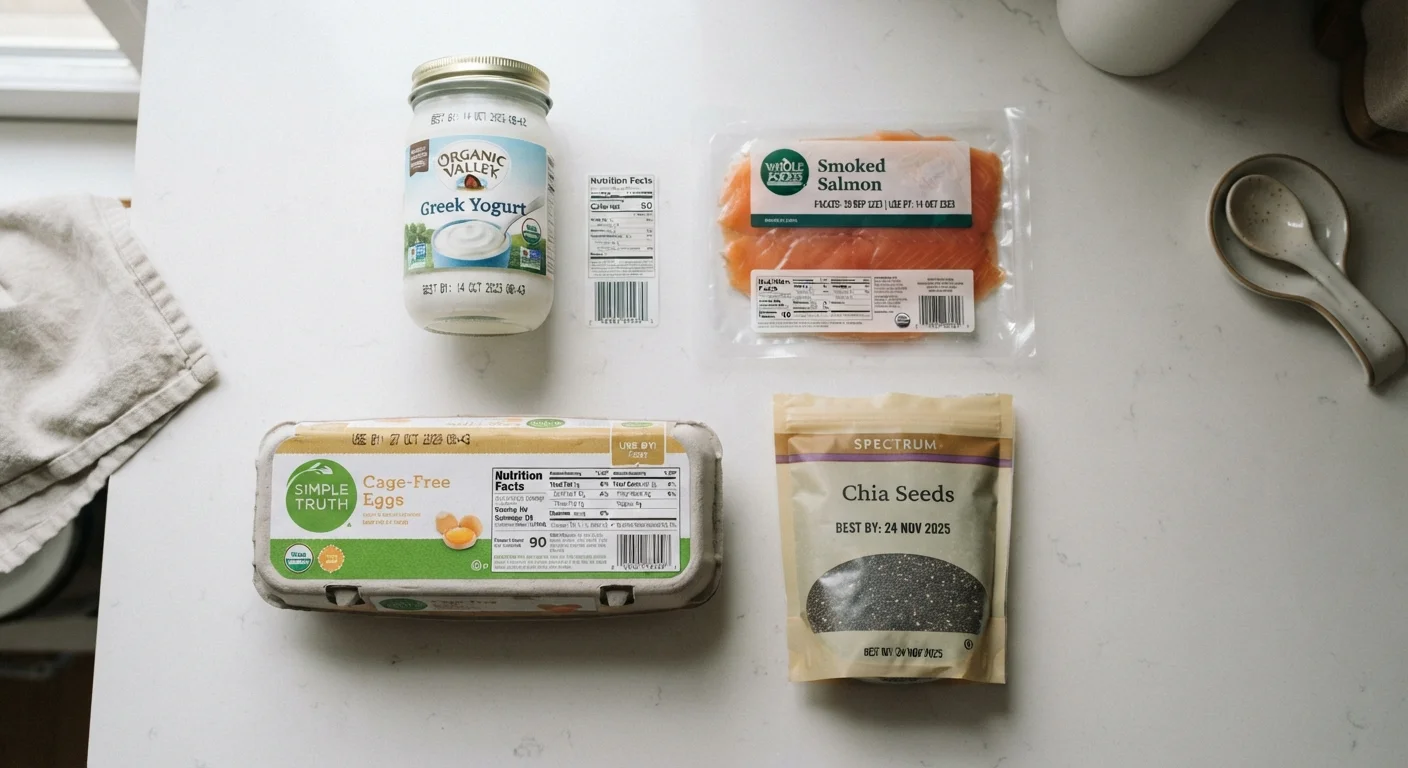
Photo: InfoAlly.net | Finding Info Made Easy editorial
Key Takeaways
- "Use By" is a safety deadline; consuming food past this date carries genuine health risk.
- "Best Before" indicates peak quality, not safety - most foods remain edible after this date.
- "Expiry Date" is typically reserved for products where potency or safety degrades critically over time.
- Confusing these three labels contributes to billions of dollars in unnecessary household food waste each year.
- Sensory checks - smell, appearance, texture - remain useful guides but cannot replace date labels on high-risk foods.
Why These Labels Exist - and Why They're Routinely Misread
Walk through any grocery store and you'll find at least three distinct types of date labels on products: Use By, Best Before, and Expiry Date. Most shoppers treat them as interchangeable shorthand for "throw it out after this." That's a costly misreading - financially and, in some cases, medically.
The U.S. food system doesn't have a single federal standard governing date labels on most products (infant formula is a notable exception). This means manufacturers apply these phrases somewhat inconsistently, and consumers are left to interpret them without clear guidance. Understanding what each term generally signals gives you a much sharper tool for making sensible decisions at home.
For context on how to read the rest of what's on the package, see our guide to decoding nutrition labels - the date stamp is just one piece of a larger label puzzle.
Myth
All date labels mean the same thing: the food is unsafe to eat after that date.
Fact
Only "Use By" dates are directly tied to food safety. "Best Before" and similar quality dates indicate peak freshness, not a safety cutoff.
Treating every date label as a hard safety deadline is one of the biggest drivers of avoidable food waste in American households. "Best Before" tells you when a manufacturer expects the product to be at its best quality - flavor, texture, color - not when it becomes dangerous. A can of beans or a box of crackers past its best-before date is often perfectly fine to eat. The date is a quality benchmark, not a health warning.
Myth
If food looks and smells fine, it's always safe to eat regardless of the date.
Fact
Some dangerous bacteria - including Listeria and certain strains of Salmonella - produce no detectable odor or visible signs of spoilage. Sensory checks alone are not reliable for high-risk foods.
The "if it smells okay, it's okay" rule works reasonably well for many stable pantry goods, but it fails precisely where it matters most: refrigerated, ready-to-eat, and high-protein foods. Pathogens like Listeria monocytogenes can multiply at refrigerator temperatures and leave no visible trace. For deli meats, soft cheeses, raw proteins, and similar items, the Use By date exists because the risk is real - don't override it with a sniff test.
Myth
"Expiry Date" and "Use By" mean the same thing on food packaging.
Fact
"Expiry Date" is most commonly found on medications, infant formula, and products where potency or formulation integrity is critical - not on everyday food. The two terms serve distinct purposes.
On a prescription drug or a canister of infant formula, the expiry date reflects laboratory-verified stability testing. After that date, the product may not deliver the intended dose, nutrient profile, or safety standard. On a grocery item, you're more likely to see "Best Before" or "Use By." When you do see "Expiry" on food packaging, treat it with the same seriousness as a "Use By" label - it signals that quality or safety cannot be guaranteed beyond that point.
Myth
Freezing food resets the clock on a "Use By" date.
Fact
Freezing halts bacterial growth and can safely extend the usable life of many foods, but it does not eliminate prior contamination or restore quality that has already declined.
If you freeze a product well before its "Use By" date, you've effectively paused the countdown - and that's a sound strategy for reducing waste. However, freezing a product that's already past or right at its "Use By" date doesn't make it safe retroactively. Bacteria that were active before freezing can resume activity upon thawing. Freeze early, not as a last resort after the date has already passed. Also note that repeated freeze-thaw cycles degrade texture and nutritional value over time.
Myth
Date labels are federally regulated and standardized across all U.S. food products.
Fact
With the exception of infant formula, there is no federal law in the U.S. mandating a uniform date-labeling system for packaged foods. Manufacturers set and apply these dates voluntarily.
This lack of standardization is a significant source of consumer confusion - and unnecessary waste. Some manufacturers print "Best If Used By," others use "Best Before," "Sell By," or "Use By" for products where the distinction matters considerably. The USDA and FDA have issued guidance encouraging industry to standardize around "Best If Used By" for quality dates and "Use By" for safety-critical items, but adoption remains voluntary and inconsistent.
The Real-World Implications for Your Shopping and Storage
Once you understand what each label actually means, a few practical habits follow naturally.
For "Use By" items - primarily deli meats, fresh seafood, raw poultry, soft cheeses, and certain ready-to-eat meals - treat the date as a firm deadline. Storage conditions matter too: a product kept at the wrong refrigerator temperature may degrade faster than the label assumes. If in doubt, discard it. The financial cost of wasted food is real, but foodborne illness costs more.
For "Best Before" items - canned goods, dried pasta, cereals, frozen vegetables, condiments - a sensible sensory check is usually sufficient after the date passes. Off smell, visible mold, or unusual texture are reliable signals. Many pantry staples remain safe well beyond their best-before dates, though flavor and texture may diminish.
For "Expiry" items - medications, certain supplements, infant formula, and some specialized medical foods - do not apply the same flexibility. In these categories, the date reflects a verified safety or potency threshold that shouldn't be stretched.
Extra Caution for Vulnerable Populations
Understanding store-brand vs. name-brand products is also relevant here: date labeling practices can vary by manufacturer. Our piece on what sets generic and store-brand products apart covers how sourcing and formulation differ in ways that affect shelf life assumptions.
If you shop for pets, the same label-literacy applies to their food. Our guide to reading pet food labels walks through what those dates mean in that context as well.
~30-40%
Share of U.S. food supply wasted each year
The USDA estimates that roughly 30-40 percent of the U.S. food supply is wasted, with misreading of date labels identified as a contributing household factor.
84%
Consumers who discard food based on date labels
A Harvard Food Law and Policy Clinic report found that approximately 84% of consumers discard food near or at the package date label out of concern for safety, even when the food may still be safe.
This article is for general informational purposes only. For questions about food safety during illness, pregnancy, or for very young children or older adults, consult a qualified healthcare professional or your local food safety authority.
The content on this site is for informational purposes only and is not a substitute for professional advice. Always consult a qualified professional for guidance specific to your situation.