
Layering Skincare Ingredients: A Reference Guide to What Pairs Well

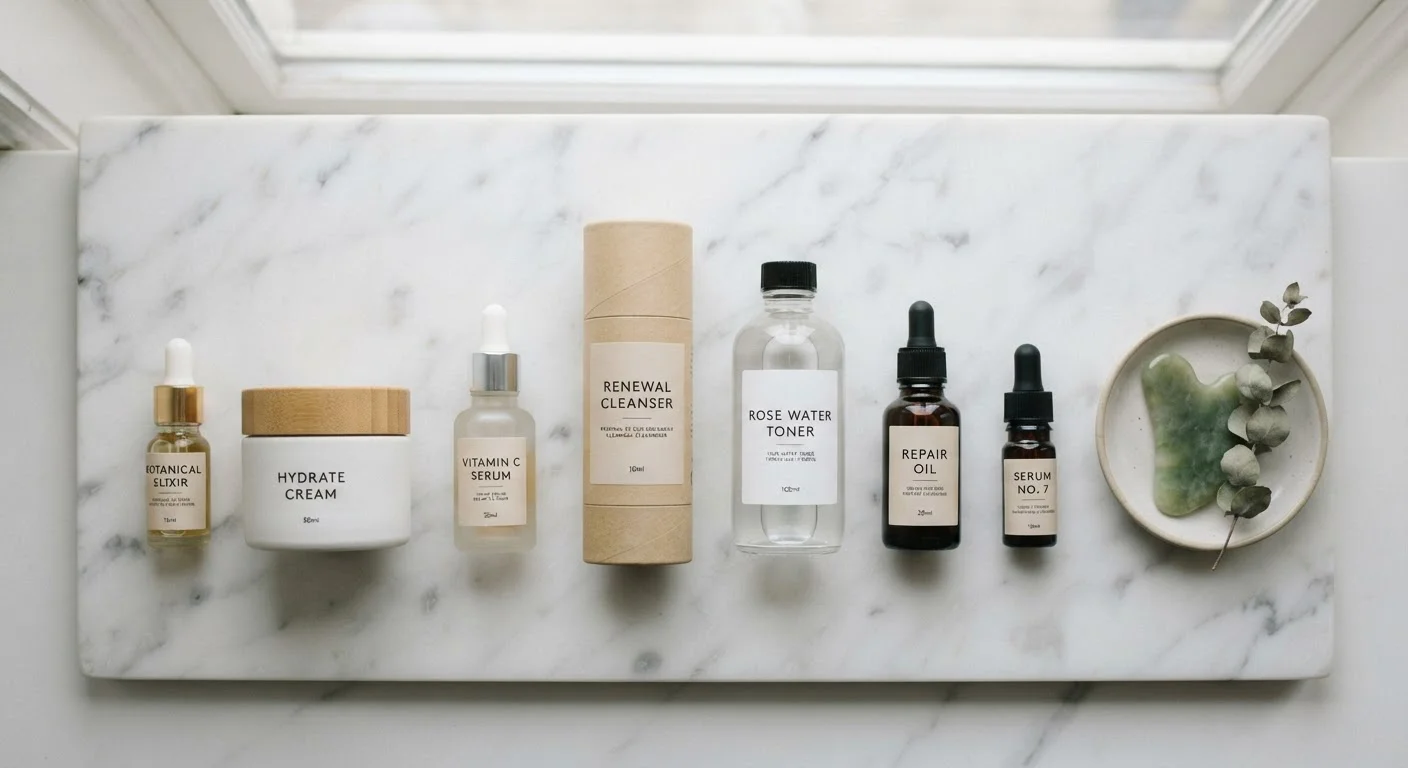
Photo: InfoAlly.net | Finding Info Made Easy editorial
Why Ingredient Pairing Matters
Building a skincare routine isn't just about choosing the right ingredients - it's about understanding how they interact. Some actives amplify each other's effects. Others cancel each other out or, in certain combinations, may cause irritation. Getting the pairing logic right means you get more from every product you use.
This guide focuses on the most common active ingredients found in everyday skincare - think retinol, vitamin C, AHAs, niacinamide, and peptides - and maps out which pairings tend to work well and which deserve a more careful approach.
Before adding any new active to your routine, it's worth working through a thoughtful process. See our pre-introduction checklist for a practical framework, from patch testing to spotting ingredient overlap.
| Safest starting active | Niacinamide - well-tolerated across most skin types |
| Most common morning active | Vitamin C (L-ascorbic acid) for antioxidant protection |
| Recommended evening actives | Retinol, AHAs/BHAs - away from UV exposure |
| Key layering principle | Apply thinnest consistency to thickest |
| Patch test rule | Test each new active for at least 24-48 hours before full use |
Pairs That Generally Work Well Together
These combinations are widely used in evidence-informed skincare routines and tend to complement each other without conflict:
- Niacinamide + Retinol: Niacinamide can help buffer some of retinol's potential for irritation, making this a popular duo for evening routines.
- Hyaluronic Acid + Almost Anything: As a humectant (a moisture-binding ingredient), hyaluronic acid layers well beneath most actives and supports the skin barrier rather than challenging it.
- Peptides + Niacinamide: Both are generally gentle and work well together to support skin texture and tone. Neither is strongly acidic or basic, so they don't destabilize each other.
- Vitamin C (L-ascorbic acid) + Vitamin E + Ferulic Acid: This trio is well-studied; the antioxidants work synergistically, and ferulic acid helps stabilize the other two.
- AHAs/BHAs + Hyaluronic Acid: Applying a hydrating serum after chemical exfoliation helps replenish moisture after the exfoliating step. See our guide on chemical vs. physical exfoliation for more on how AHAs and BHAs work.
Active Ingredient
A skincare ingredient that has a measurable, direct effect on the skin, such as exfoliating, brightening, or stimulating cell turnover. Examples include retinol, vitamin C, and AHAs.
AHA (Alpha Hydroxy Acid)
A class of water-soluble chemical exfoliants derived from natural sources like fruit or milk. Common examples include glycolic acid and lactic acid; they work on the skin's surface to improve texture and tone.
Retinol
A vitamin A derivative widely used in skincare to support skin renewal and address concerns like uneven texture. It can cause dryness or sensitivity, especially when first introduced.
Humectant
An ingredient that draws water from the environment or deeper skin layers to the surface, helping to maintain hydration. Hyaluronic acid and glycerin are classic examples.
Niacinamide
A form of vitamin B3 used in skincare for its versatility - it's associated with improving the look of pores, uneven skin tone, and skin barrier function, and is generally well-tolerated.
Peptides
Short chains of amino acids that serve as building blocks for proteins like collagen and elastin. In skincare, they're used to support skin firmness and texture.
Combinations to Approach With Caution
These pairings aren't always harmful, but they're worth approaching carefully - especially if your skin is sensitive or you're new to actives:
- Retinol + AHAs/BHAs: Combining these in the same application can push irritation and dryness. Many dermatologists suggest alternating them on different nights rather than layering in one routine.
- Vitamin C (L-ascorbic acid) + AHAs: Both are acidic and can be destabilizing together. Vitamin C is typically best used in a morning routine, while AHAs fit better in the evening.
- Benzoyl Peroxide + Retinol: Benzoyl peroxide may oxidize and deactivate retinol, reducing its effectiveness. These are generally best used at separate times.
- Multiple Strong Actives at Once: Stacking several high-potency actives in one routine - even pairs that are individually fine - can overwhelm the skin barrier.
Your evening routine is an especially important window for getting ingredient order right. Our article on nighttime skincare habits covers why application sequence matters as much as what you're applying.
Skin Sensitivity Varies Widely
General Layering Principles
Even if specific combinations seem fine on paper, skin individuality means your experience may vary. A few durable principles help:
- Introduce one new active at a time so you can clearly identify any reaction.
- Layer thinnest to thickest - water-based serums before oils and creams.
- Morning vs. evening matters: Vitamin C and SPF pair well in the morning; retinol and exfoliants are generally better suited to nighttime use.
- Less is often more: Using fewer actives consistently tends to outperform a complex stack used sporadically.
Skin also behaves differently across the year, and combinations that work in summer may need tweaking in winter. Our guide to seasonal skincare adjustments explores how to adapt your routine as conditions change.
This article is for general informational purposes only and is not a substitute for professional dermatological advice. If you experience persistent irritation, redness, or other skin concerns, consult a qualified dermatologist.
The content on this site is for informational purposes only and is not a substitute for professional advice. Always consult a qualified professional for guidance specific to your situation.