
Minimalist Beauty Routines: What You Gain and What You Give Up

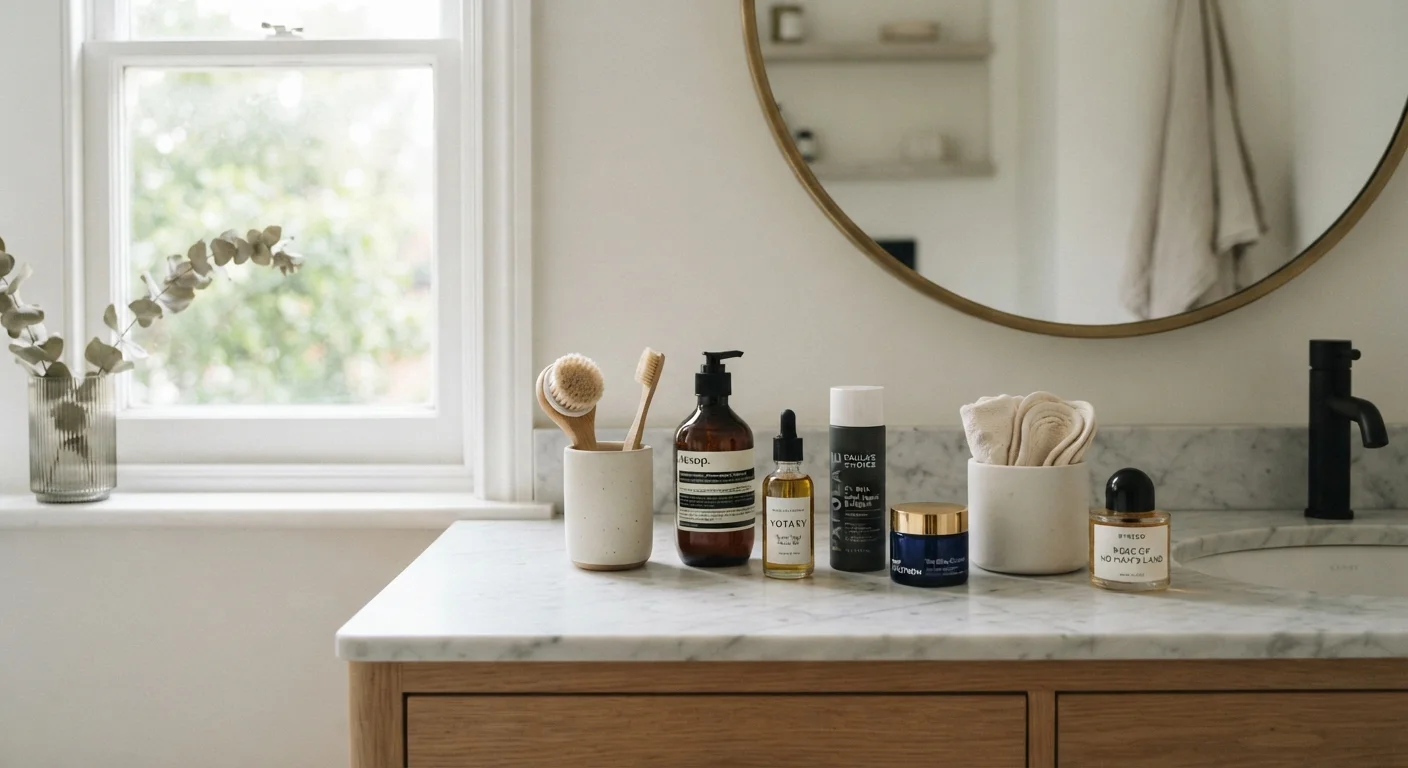
Photo: InfoAlly.net | Finding Info Made Easy editorial
Key Takeaways
- Minimalist beauty routines can save time and reduce spending without sacrificing skin health.
- Fewer products lowers the risk of ingredient overload and skin irritation.
- Some skin concerns genuinely benefit from targeted, multi-step treatments.
- A minimalist approach requires intentional product choices, not just cutting everything.
- Your routine can evolve seasonally without abandoning a simple foundation.
Saves meaningful time every morning and evening
A routine with three to five steps can take under five minutes, making it far easier to stay consistent even on hectic days.
Reduces risk of ingredient overload and irritation
Layering too many active ingredients - like retinoids, acids, and vitamin C together - can compromise the skin barrier. Fewer products mean fewer potential conflicts.
Cuts recurring beauty spending significantly
Each product you remove is one less item to repurchase. Over months, this adds up to a measurable reduction in personal care costs.
Easier to identify what's actually working
With fewer variables, you can quickly pinpoint which product is causing a breakout or which is responsible for visible improvement.
Reduces decision fatigue at the start of the day
Fewer choices in the morning preserves mental energy - a small but real benefit backed by behavioral psychology research on cognitive load.
Targeted skin concerns may be underserved
Conditions like post-acne marks or persistent dryness often respond best to specific, dedicated treatments that a minimal routine deliberately excludes.
Requires more careful, informed product selection
When one product has to work harder, picking the wrong one is more consequential. There's less room for trial-and-error mismatches.
May feel limiting for expressive or occasion makeup
A minimalist approach works well for everyday looks but doesn't accommodate evenings or events where more coverage or color is genuinely desired.
Transition period can temporarily disrupt skin balance
Removing products your skin has adapted to - especially actives - can cause a brief adjustment period before things settle.
What Minimalist Beauty Actually Means
Minimalist beauty isn't about neglecting your skin or skipping self-care - it's about editing intentionally. The core idea is to keep only the steps and products that deliver real, observable results and drop everything else. For skincare, that typically means anchoring your routine around a cleanser, a moisturizer, and a broad-spectrum SPF. For makeup, it might mean a single multitasking product - like a tinted moisturizer with SPF - instead of a five-step base.
This approach has gained real traction as a counterpoint to the multi-step "skincare maximalist" trend that filled social media feeds with ten-plus-step routines. Dermatologists and estheticians have increasingly noted that more products don't automatically mean better skin - and for some people, they actively cause problems. The minimalist framework asks: what does your skin actually need, right now?
If you're curious how routine-building logic applies beyond beauty, balanced daily routines in other areas of life follow surprisingly similar principles.
The Real Advantages of Doing Less
There's a strong case for scaling back - and it goes beyond saving a few minutes each morning.
Saves meaningful time every morning and evening
A routine with three to five steps can take under five minutes, making it far easier to stay consistent even on hectic days.
Reduces risk of ingredient overload and irritation
Layering too many active ingredients - like retinoids, acids, and vitamin C together - can compromise the skin barrier. Fewer products mean fewer potential conflicts.
Cuts recurring beauty spending significantly
Each product you remove is one less item to repurchase. Over months, this adds up to a measurable reduction in personal care costs.
Easier to identify what's actually working
With fewer variables, you can quickly pinpoint which product is causing a breakout or which is responsible for visible improvement.
Reduces decision fatigue at the start of the day
Fewer choices in the morning preserves mental energy - a small but real benefit backed by behavioral psychology research on cognitive load.
27%
Consumers who report simplifying their routines
A Mintel consumer beauty report found that roughly one in four US consumers actively sought to simplify their personal care routines in response to product overload.
5 min
Average time for a core minimalist skincare routine
Estheticians generally cite cleanse-moisturize-SPF as achievable in under five minutes, lowering the barrier to daily consistency.
On the financial side, a shorter routine naturally reduces how much you're spending on products each month. That matters when you consider that the average American spends hundreds of dollars annually on personal care. Building a realistic personal budget often involves auditing these recurring costs, and a beauty edit is one of the more painless places to start.
The Trade-Offs Worth Knowing
Minimalism isn't a universal solution. Some skin concerns - active acne, hyperpigmentation, or significant dryness - may genuinely benefit from targeted treatments that a bare-bones routine won't include. Dropping an exfoliant, a vitamin C serum, or a retinoid because it "feels like too much" could slow progress on specific goals.
Targeted skin concerns may be underserved
Conditions like post-acne marks or persistent dryness often respond best to specific, dedicated treatments that a minimal routine deliberately excludes.
Requires more careful, informed product selection
When one product has to work harder, picking the wrong one is more consequential. There's less room for trial-and-error mismatches.
May feel limiting for expressive or occasion makeup
A minimalist approach works well for everyday looks but doesn't accommodate evenings or events where more coverage or color is genuinely desired.
Transition period can temporarily disrupt skin balance
Removing products your skin has adapted to - especially actives - can cause a brief adjustment period before things settle.
It's also worth noting that a minimalist routine requires more deliberate product selection, not less. Choosing one moisturizer to do the heavy lifting means that one product has to be genuinely well-suited to your skin type. If you're navigating that process, evening skincare steps that make a difference can help you prioritize which steps are hardest to cut.
When to Consult a Dermatologist
Building Your Minimal Routine Without Starting from Scratch
The smartest way to minimize is gradually. Start by identifying the two or three products you use every single day and actually notice when you skip them. Those are your anchors. Everything else is optional - test removing items one at a time and give your skin two to three weeks to adjust before drawing conclusions.
Seasonality matters here too. A stripped-back summer routine might not serve you in a dry winter - seasonal skincare adjustments show why some flexibility in a minimal routine is actually a feature, not a contradiction. Similarly, if you're newer to makeup and feeling overwhelmed by options, a first-timer's introduction to makeup routines can help you figure out which steps actually belong in your personal foundation.
The goal isn't a specific number of products - it's a routine you can maintain consistently, that keeps your skin comfortable, and that feels like yours.
The content on this site is for informational purposes only and is not a substitute for professional advice. Always consult a qualified professional for guidance specific to your situation.