
Smart Homes Are Not as Complicated-or as Cheap-as People Think

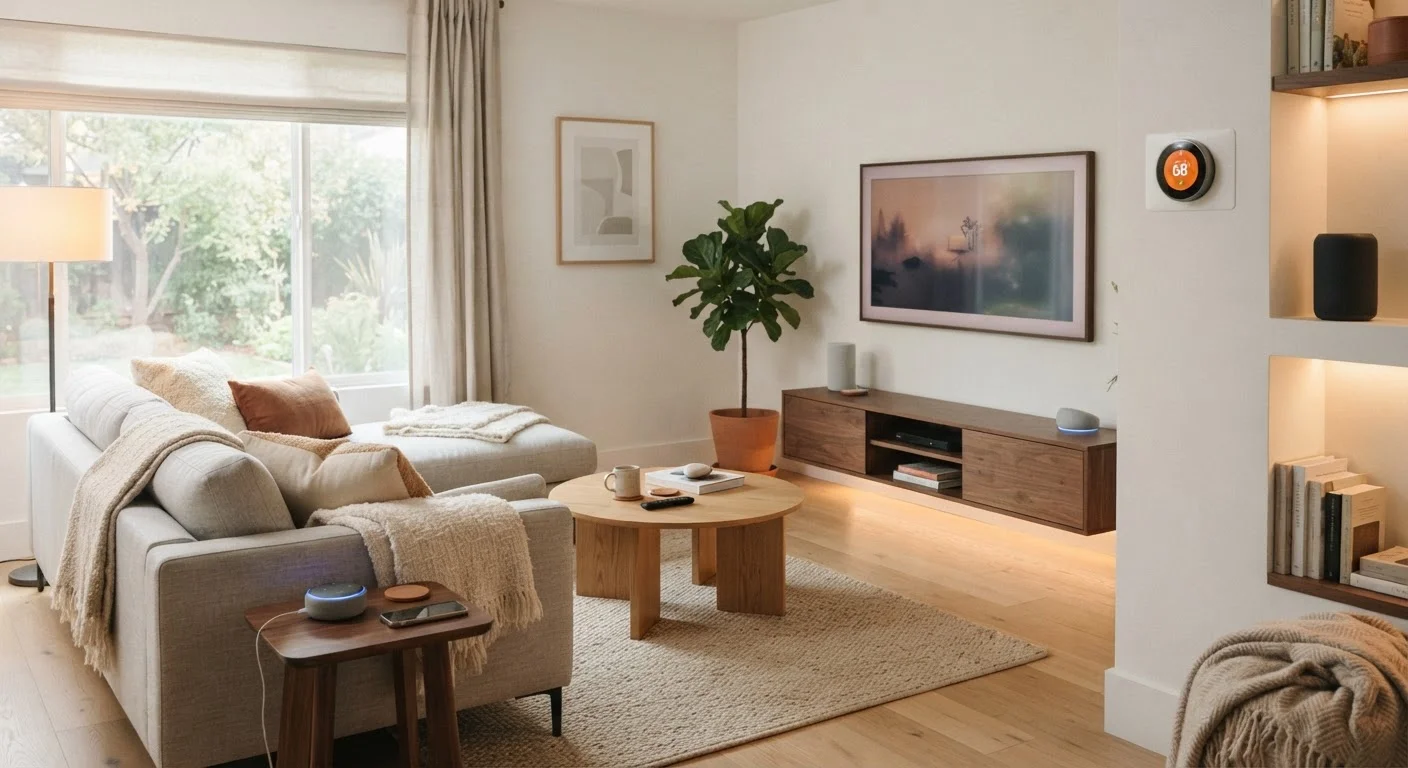
Photo: InfoAlly.net | Finding Info Made Easy editorial
Key Takeaways
- Many smart home devices require no wiring or technical expertise to install.
- Entry-level smart home setups can cost less than most people assume, but whole-home automation adds up quickly.
- Privacy risks are real but manageable with simple network hygiene practices.
- Devices from different brands don't always work together - compatibility research matters before buying.
- Smart home tech can fail like any networked device; a backup plan is worth building in.
The Smart Home Reputation Problem
Smart home technology sits at an awkward intersection of hype and skepticism. Enthusiast coverage tends to make it sound effortless and transformative. Cautionary coverage makes it sound like an expensive, hackable surveillance system. Most everyday homeowners land somewhere in the middle - curious but uncertain about what's actually true.
The reality is that connected home technology has matured considerably, but it still comes with genuine trade-offs that are worth understanding before you invest time or money. For a grounded overview of what these devices actually do and how they communicate, start with the fundamentals of connected home tech. What follows are the most persistent misconceptions - examined honestly.
Busting the Most Common Smart Home Myths
Whether you've been holding off because you assume you'd need a contractor, or you've been put off by stories about devices eavesdropping, these paired myth-and-fact breakdowns address the beliefs that most commonly stand between homeowners and a realistic assessment of smart home technology.
Myth
Setting up a smart home requires an electrician or professional installer.
Fact
Most entry-level smart devices are designed for plug-in or simple screw-in installation - no wiring knowledge needed.
The image of someone drilling into walls and running new cables puts a lot of people off. In reality, many of the most popular smart home starting points - smart bulbs, plug-in outlets, voice assistants, and even some thermostats - install the same way ordinary products do. A smart bulb screws into a standard socket. A smart plug inserts into any outlet. More complex installations, like in-wall light switches or hardwired doorbells, do sometimes require turning off breakers and working with existing wiring, but these are mid-to-advanced steps, not the starting point. If you're just beginning, start with plug-and-play devices that need nothing beyond a Wi-Fi password.
Myth
Smart homes are affordable - a few hundred dollars gets you a fully automated house.
Fact
Basic automation is genuinely accessible, but outfitting an entire home costs significantly more than most initial estimates.
A single smart speaker or a starter kit of smart bulbs can cost less than a dinner out. That part is true. Where costs escalate is when homeowners decide they want every light, lock, thermostat, camera, and appliance connected. Multiply device counts across a typical home and add in a hub if your ecosystem requires one, and costs can reach into the thousands. There are also ongoing considerations: some devices require subscription plans to unlock their full feature sets. The smart financial approach is to start small, prove the value to yourself in one or two rooms, and expand deliberately. See which rooms tend to deliver the clearest value first.
Myth
All smart home devices work together regardless of brand.
Fact
Interoperability between brands is improving but still not universal - platform and protocol compatibility must be checked in advance.
The industry has taken meaningful steps toward cross-brand compatibility. The Matter standard, developed by a coalition of major technology companies, aims to let devices from different manufacturers communicate through a common language. However, not all existing devices support Matter, and even within that standard, some features remain platform-specific. Before purchasing any device, check which platforms (voice assistants, hubs, or apps) it officially supports. Understanding what a hub does and whether you need one is a useful step in planning a compatible setup from the start.
[important_callout]Myth
Smart home devices are always listening and sending your conversations to corporations.
Fact
Most voice-activated devices use a local wake word to trigger recording - but privacy risks do exist and deserve attention.
Voice assistants are designed to listen for a specific trigger phrase before sending audio to the cloud for processing. In normal operation, idle conversation is not transmitted. That said, accidental activations do occur, and audio snippets may be reviewed by platform teams for quality-improvement purposes - a practice that has received scrutiny and, in some cases, led to policy updates. Cameras introduce separate considerations around video storage and access. These are genuine privacy trade-offs worth understanding, not reasons to panic. [warning_callout] Regularly reviewing app permissions and opting out of data-sharing programs where possible gives you meaningful control.
Myth
Once set up, a smart home just runs itself without any maintenance.
Fact
Smart home devices require occasional firmware updates, troubleshooting, and sometimes reconfiguration after network changes.
Automation routines do handle a lot on their own - that's the appeal. But the underlying technology needs upkeep. Devices receive firmware updates to patch security vulnerabilities and add features; skipping these leaves you exposed. Wi-Fi password changes, router replacements, or internet outages can knock devices offline entirely. If you've ever experienced an unexplained connectivity failure, the cause is almost always traceable to one of a handful of common issues. Understanding why smart home connections drop helps you fix problems faster when they occur.
57%
US households with at least one smart device
Research from Parks Associates has tracked growing smart home device adoption among US broadband households over recent years.
~$1,500
Typical mid-range whole-home automation cost
Industry estimates for equipping a mid-size home with smart lighting, a thermostat, a doorbell, and a couple of cameras typically fall in the low-to-mid thousands before installation.
3-5 min
Average setup time for plug-in smart devices
Consumer electronics reviewers consistently note that most plug-in and screw-in smart devices can be operational within a few minutes of unboxing.
When you're ready to move from understanding to action, a practical first-time setup walkthrough can help you sequence devices and apps in the right order from the start. And if you're curious about how smart locks compare to traditional deadbolts as a starting point, this breakdown of smart locks vs. deadbolts puts the differences in plain terms.
The content on this site is for informational purposes only and is not a substitute for professional advice. Always consult a qualified professional for guidance specific to your situation.