
Multimodal Commuting: Building a Daily Route That Combines Multiple Transport Types

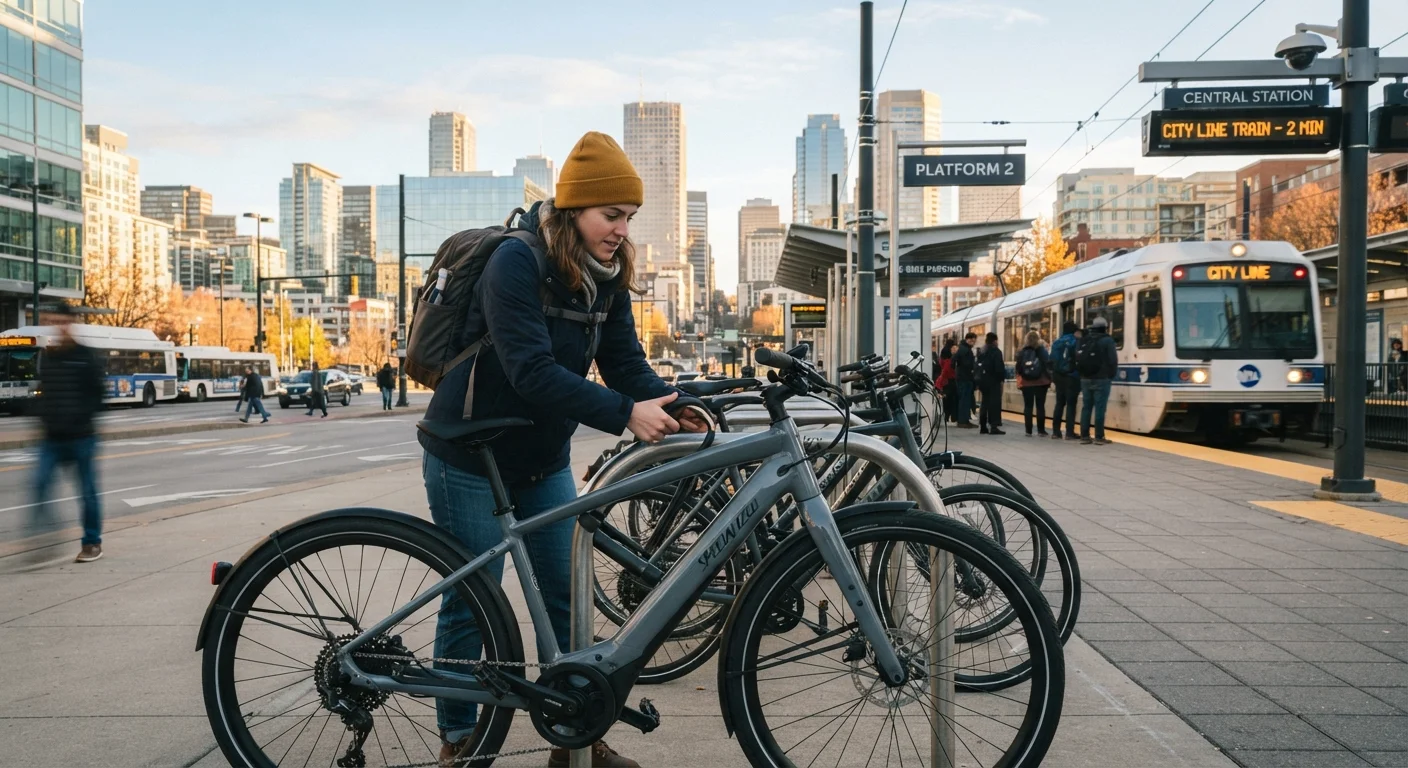
Photo: InfoAlly.net | Finding Info Made Easy editorial
Key Takeaways
- Multimodal commuting combines two or more transport types - like transit, e-bikes, and walking - into one trip.
- Mapping your full route in segments reveals where each mode offers the most practical advantage.
- Transfer points and timing gaps are the most common failure points to plan around.
- Digital trip-planning tools significantly reduce the trial-and-error of building a hybrid route.
- Transportation costs often drop when a personal vehicle is replaced or supplemented by transit and micromobility.
- A test run during low-stakes conditions helps you refine the route before relying on it daily.
Why Multimodal Commuting Is Worth the Upfront Planning
Most Americans drive solo to work - but that's not always the most practical, affordable, or low-stress option available. Multimodal commuting means deliberately combining two or more transportation types - public transit, e-bikes, scooters, walking, or rideshare - into a single daily trip. Done well, it can reduce fuel and parking costs, sidestep gridlock, and even build incidental movement into your day.
The shift away from single-mode car commuting is gaining traction. As commuting habits evolve across the US, more people are discovering that a layered route - even one that adds a few minutes - can feel noticeably less exhausting than sitting in traffic alone.
The upfront investment is mostly mental: thinking clearly about your origin, destination, and the gaps in between. This guide walks you through that process step by step.
What you will need
Building Your Multimodal Route: Step by Step
Follow these steps to map, test, and refine a daily route that realistically works for your situation. Adjust the sequence as your geography and available services dictate.
Map Your Full Trip in Segments
Start by breaking your commute into logical legs rather than treating it as one undivided journey. Identify your first mile (home to a transit hub or pick-up point), your main haul (the longest or fastest-moving segment), and your last mile (transit stop to final destination). Each leg may suit a different mode.
Match Each Leg to the Most Practical Mode
Evaluate each segment based on distance, available infrastructure, and your own comfort level. Walking works well for legs under half a mile on safe pedestrian routes. E-bikes and scooters extend practical range to roughly 2-5 miles per segment. Transit handles longer distances efficiently where schedules align with your departure window.
If rideshare fills a gap, note that relying on it as a daily anchor carries its own trade-offs - rideshare as primary transportation can add unpredictable cost and wait times.
Identify Transfer Points and Time Windows
List every point where you switch modes. For each, note: How long does the connection realistically take? What happens if your incoming mode is 5-10 minutes late? A route with one or two well-buffered transfers is far more reliable daily than one with three tight connections.
Account for Weather and Backup Scenarios
A cycling segment that works perfectly in September may be impractical in January or during heavy rain. Build a weather contingency into your plan - identify which leg you'd replace and with what alternative. This is especially important if a bike or scooter segment is load-bearing for your timing.
Run a Test Commute Before Committing
Do a trial run on a weekend morning or a low-stakes workday. Walk the transfer points, note actual timing versus estimated, and observe where friction appears - a poorly marked station entrance, a missing bike rack, an app that loses GPS in a tunnel. Refine your plan based on what you observe rather than what the map suggests.
Active Segments Double as Exercise
Common Pitfalls and How to Avoid Them
Even a well-planned multimodal route has friction points. The most common is the transfer gap - the window between one mode ending and the next beginning. A bus that runs every 20 minutes can make a tight connection feel risky. Build in buffer time, especially on days when weather or service disruptions are more likely.
Carrying gear is another practical challenge. If you're cycling a segment, think through what you'll do with a helmet, a change of clothes, or a laptop. Many frequent multimodal commuters settle on a single well-organized bag and keep redundant items (like a spare lock) at their destination.
Safety Gear Is Non-Negotiable on Cycling Segments
Finally, don't underestimate the cost picture. Transportation spending is one of the most underestimated household budget categories - see how these costs add up before assuming multimodal will always save money. It often does, but the math depends on your specific mix of modes, distances, and existing vehicle costs.
Tools That Make Multimodal Planning Easier
You don't have to figure all of this out on paper. A growing category of trip-planning apps is specifically designed to string together transit, bike-share, scooter, and walking legs into a single navigable route. Transit apps and trip-planning tools vary widely in coverage and accuracy by city, so it's worth testing a few options for your specific region rather than assuming one tool covers everything.
If e-bikes or scooters form part of your route, micromobility networks are expanding in many mid-size and large US cities, with docked and dockless options available through separate apps or integrated platforms. Many transit agencies also publish real-time schedule data that feeds directly into third-party planners.
For those reducing or eliminating a personal vehicle, getting around without a car offers a broader framework for thinking through daily mobility - useful context once your commute route is set.
The content on this site is for informational purposes only and is not a substitute for professional advice. Always consult a qualified professional for guidance specific to your situation.