
Credit Cards, Personal Loans, and Lines of Credit: How Borrowing Options Compare

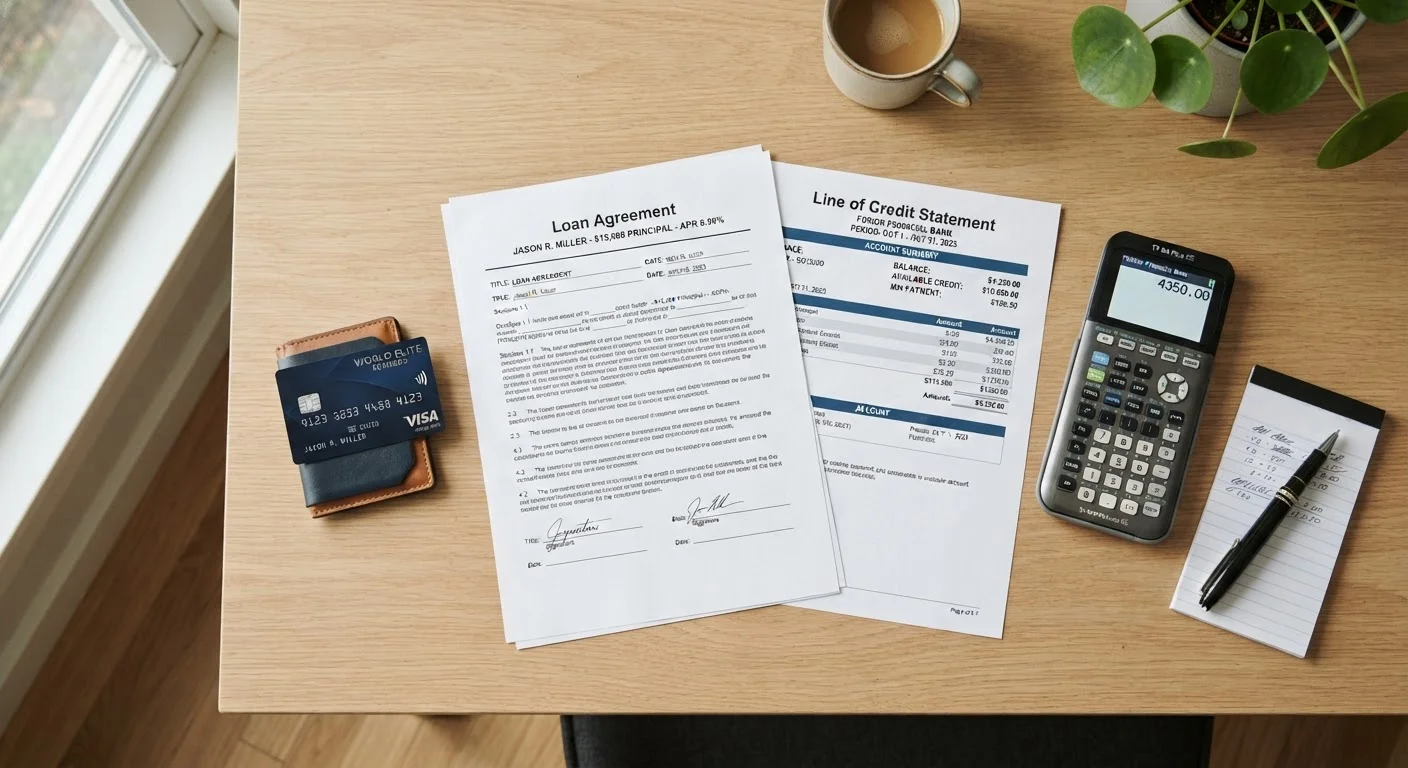
Photo: InfoAlly.net | Finding Info Made Easy editorial
Key Takeaways
- Credit cards offer revolving credit best suited to everyday purchases and short-term borrowing.
- Personal loans provide a fixed lump sum with predictable monthly payments, often used for large one-time expenses.
- Lines of credit offer flexible, draw-as-needed access to funds - useful for unpredictable or ongoing costs.
- Interest rates, repayment structures, and credit impact vary significantly across all three options.
- Consulting a licensed financial professional can help you choose the borrowing tool that fits your specific situation.
Three Borrowing Tools, Three Different Structures
When most people think about borrowing money, they picture a credit card - but that's only one of several common options. Personal loans and lines of credit also appear regularly in everyday financial decisions, and each works quite differently under the hood.
Understanding the structural differences matters because the wrong tool for the job can cost you more money, create repayment stress, or limit your financial flexibility. This article breaks down how each option is organized, what it typically costs, and when it tends to make sense - so you can approach any borrowing decision with greater clarity.
For a broader look at credit fundamentals, see our comprehensive debt and credit guide.
How Each Option Works
Credit Cards
A credit card gives you a revolving credit limit - a maximum balance you can carry at any time. You can borrow, repay, and borrow again as often as you like, up to that limit. If you pay your full balance each billing cycle, you typically owe no interest. Carry a balance, and interest accrues - usually at a variable rate that can be significantly higher than other borrowing options.
Personal Loans
A personal loan delivers a fixed lump sum upfront, which you repay in equal monthly installments over a set term - often ranging from one to seven years. The interest rate may be fixed or variable, but fixed-rate loans are common. Once approved, there's no ongoing access to additional funds without a new application.
Lines of Credit
A line of credit (LOC) sits between the two. Like a credit card, it's revolving - you draw funds up to your approved limit as needed. Like a loan, it typically carries a lower rate than a credit card and may have a defined draw period followed by a repayment period. Home equity lines of credit (HELOCs) are a secured variant; personal lines of credit are generally unsecured.
| Credit Card | Personal Loan | Line of Credit | |
|---|---|---|---|
| Structure | Revolving credit limit | Fixed lump sum | Revolving draw limit |
| Repayment | Flexible minimum payments | Fixed monthly installments | Interest-only or flexible payments |
| Typical Interest Rate | Often highest of the three | Often lower; may be fixed | Variable; generally mid-range |
| Access to Funds | Ongoing, up to limit | One-time disbursement | Draw as needed, up to limit |
| Best For | Everyday or short-term spending | Large one-time expenses | Ongoing or unpredictable costs |
| Collateral Required | Usually none (unsecured) | Usually none (unsecured) | Varies (secured or unsecured) |
Interest Rates and What They Actually Cost You
Interest rates differ considerably across these three options, and that gap compounds quickly over time.
20%+
Average credit card APR in the US
Federal Reserve data has shown average credit card interest rates exceeding 20% annually in recent years, making unpaid balances costly.
1-7 years
Typical personal loan repayment term
Most personal loans are structured with repayment periods ranging from one to seven years, giving borrowers a defined payoff timeline.
Credit cards frequently carry the highest rates, particularly for cardholders who carry balances month to month. Personal loans often come with lower rates, especially for borrowers with strong credit, because the lender has a defined repayment schedule and predictable risk. Lines of credit generally fall in between - lower than most credit cards, but rates can be variable and adjust with broader interest rate changes.
Total cost of borrowing isn't just the rate - it's the rate multiplied by how long you carry the balance. A credit card balance left unpaid for 18 months can cost far more than a personal loan at a higher rate if the loan is repaid on schedule. Understanding how your credit score affects the rates you're offered is essential before applying for any of these products.
When Each Option Tends to Be Used
These tools aren't interchangeable - they align with different types of financial needs.
- Credit cards work well for routine purchases, travel expenses, or short-term needs you're confident you can repay within the billing cycle. Rewards and purchase protections can add value when the balance is managed responsibly.
- Personal loans are commonly used for large, defined costs - home repairs, medical bills, debt consolidation, or major purchases. The structured repayment timeline makes budgeting more predictable. If you're considering financing a vehicle, also review common car financing pitfalls before signing.
- Lines of credit suit situations where costs are ongoing or uncertain - a home renovation with shifting expenses, for example, or a buffer for irregular income. Drawing only what you need means you only pay interest on what you've actually borrowed.
If you're weighing a large purchase specifically, comparing financing to paying cash upfront can help frame the decision more clearly.
Match the Tool to the Task
How Borrowing Affects Your Credit
Each borrowing type interacts with your credit profile in slightly different ways. Credit cards affect your credit utilization ratio - the percentage of your available revolving credit you're using. Keeping this ratio low is generally favorable for your score.
Personal loans add an installment account to your credit mix, which can be a positive factor. However, applying for any new credit triggers a hard inquiry, which may cause a temporary dip in your score.
Lines of credit function similarly to credit cards from a utilization standpoint. A large draw relative to your credit limit could raise your apparent utilization.
Before taking on any new debt, consider reviewing this pre-loan readiness checklist to assess your current standing. And if you're already managing multiple debts, exploring repayment strategies like the snowball or avalanche method may help you prioritize effectively.
This article is for general informational and educational purposes only and does not constitute personalized financial or legal advice. Consult a licensed financial professional for guidance tailored to your individual circumstances.
The content on this site is for informational purposes only and is not a substitute for professional advice. Always consult a qualified professional for guidance specific to your situation.