
Robot Vacuums: Separating the Genuine Wins from the Overhyped Claims

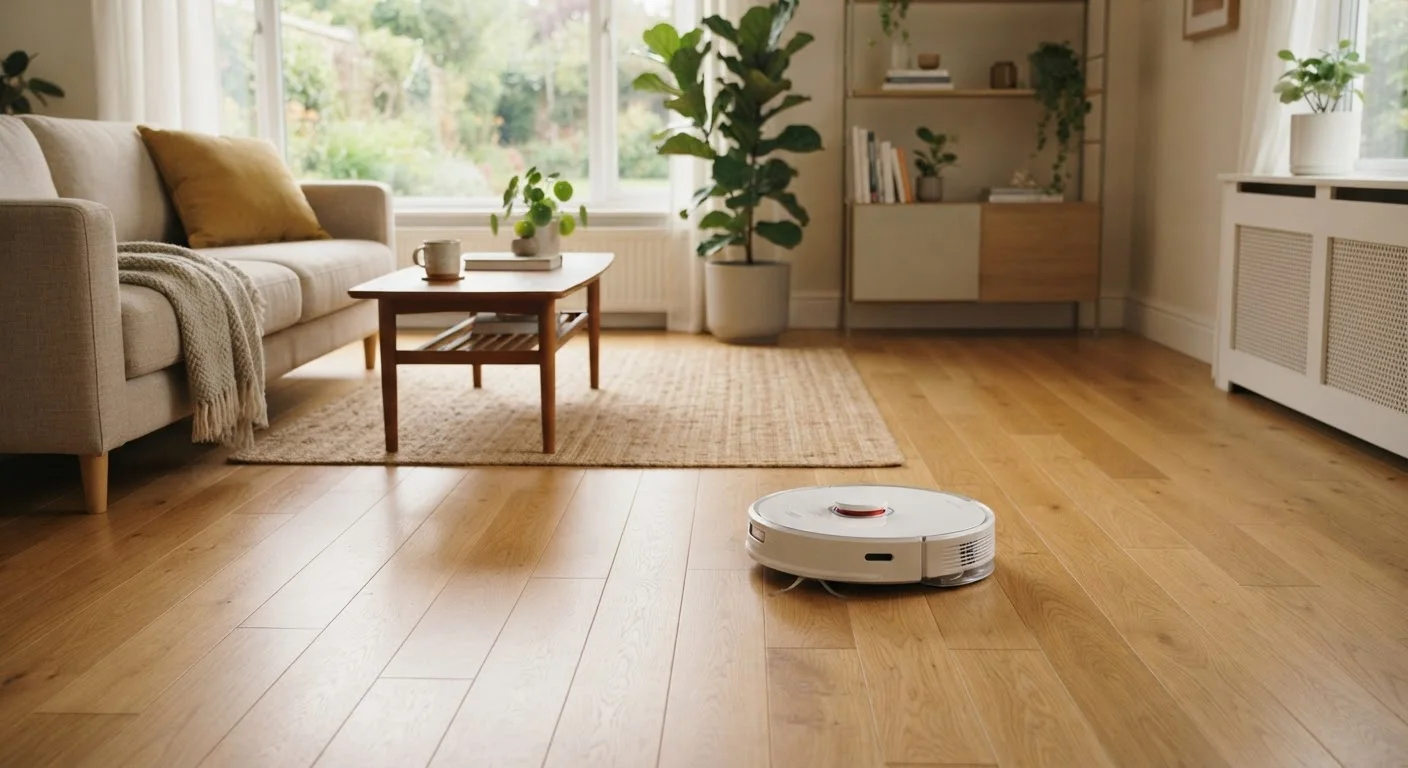
Photo: InfoAlly.net | Finding Info Made Easy editorial
Key Takeaways
- Robot vacuums genuinely reduce daily dust and debris buildup on hard floors and low-pile carpet.
- They cannot fully replace a traditional vacuum for deep cleaning, stairs, or high-pile rugs.
- Scheduling and navigation features vary widely - advertised claims don't always reflect real-world performance.
- Homes with lots of clutter, cables, or pet hair require extra preparation to get reliable results.
- Robot vacuums work best as a complement to, not a replacement for, occasional manual cleaning.
What Robot Vacuums Actually Do Well
Robot vacuums earn their keep at one specific job: maintaining baseline cleanliness between deeper cleaning sessions. On hard floors - hardwood, tile, laminate - they are genuinely effective at picking up crumbs, dust, pet dander, and hair on a daily basis. That consistent light maintenance is something most households struggle to keep up with manually.
Scheduled runs mean the floor gets attention even when life gets busy. Many units can now map rooms, return to their charging dock, and resume interrupted cycles - all without any input from you. For a household with pets or kids who track in debris regularly, that kind of set-and-forget routine delivers real, visible value.
If you're weighing which rooms to automate first, see our guide on which rooms benefit most from automation - robot vacuums tend to shine in open-plan spaces with hard flooring.
~30 min
Typical runtime per charge cycle
Most mainstream robot vacuum models advertise 60-120 minutes, but real-world runtime on a full cleaning cycle in an average-sized home often runs shorter depending on floor type and obstacle density.
500 ml
Average dustbin capacity
Consumer product specifications consistently show standard robot vacuum dustbins in the 300-600 ml range, meaning daily emptying is often necessary in homes with pets or high foot traffic.
Common Myths - Corrected
Marketing around robot vacuums is ambitious. Words like "intelligent," "whole-home coverage," and "no-maintenance" appear constantly on packaging and product pages. It's worth slowing down and asking what those phrases actually mean in a real home with furniture, thresholds, and tangled charging cables.
Myth
A robot vacuum can replace my regular vacuum entirely.
Fact
Robot vacuums maintain cleanliness but cannot substitute for deep, thorough vacuuming sessions.
Robot vacuums have shallow dustbins, limited suction power compared to full-size models, and cannot reach stairs, upholstered furniture, or tight vertical corners. They are designed for frequent, light passes - not the kind of deep extraction that dislodges embedded debris from thick carpet fibers. Most cleaning experts recommend treating them as a daily maintenance tool, not a complete replacement for a traditional vacuum used periodically.
Myth
Robot vacuums handle any floor type equally well.
Fact
Performance varies significantly across floor surfaces, especially on thick or shaggy rugs.
Hard floors and low-pile carpet are where robot vacuums perform most reliably. High-pile, shaggy, or plush rugs present real challenges - the unit can lose traction, struggle to navigate edges, or get stuck entirely. Some models include sensors to detect and avoid certain rug types, but that means those areas simply don't get cleaned. Always check the manufacturer's stated compatibility with your specific floor types before assuming universal coverage.
Myth
Once set up, robot vacuums need almost no ongoing attention.
Fact
Regular maintenance - emptying bins, cleaning brushes, clearing obstacles - is essential for reliable performance.
Dustbins on most robot vacuums fill up quickly, especially in pet-owning households, and a full bin means the unit stops picking up debris effectively. Brush rolls collect hair that must be manually removed to prevent motor strain. Sensors need occasional wiping to maintain accurate navigation. Self-emptying base stations reduce bin-emptying frequency but still require their own maintenance. A robot vacuum that isn't regularly serviced will underperform noticeably within weeks.
Myth
Smart mapping means the robot knows your home perfectly from day one.
Fact
Mapping improves over time and often requires corrections after furniture moves or layout changes.
Laser-based (LiDAR) mapping is more accurate than camera-only systems, but even the best maps need a few cleaning runs to stabilize. Moving a couch, adding a rug, or rearranging furniture can confuse a stored map and cause the robot to skip rooms or repeat areas. Most apps allow manual map editing, but this step is often glossed over in marketing materials. Expect a learning period of several runs before your map reliably reflects your home's actual layout.
Myth
A higher price always means meaningfully better cleaning results.
Fact
Premium pricing often reflects navigation and convenience features rather than raw suction performance.
Many of the cost increases at higher price tiers go toward features like self-emptying bases, color camera obstacle avoidance, or voice-assistant integration - not necessarily stronger suction or better brush design. For homes with straightforward layouts and hard floors, a mid-range unit may clean just as effectively as a premium model. Understanding which features actually matter for your specific home is a more reliable guide than price alone.
For a broader framework on cutting through similar product claims, this practical comparison guide offers useful questions to ask before any cleaning product purchase.
Setting Realistic Expectations at Home
The households that get the most out of robot vacuums are the ones that prepare for them. That means regularly picking up socks, cables, and small toys from the floor before a scheduled run - otherwise the robot gets stuck or skips areas entirely. Think of it less as "the robot cleans for me" and more as "we've divided the cleaning work."
Deep cleaning - moving furniture, getting into corners, tackling stairs, or refreshing high-pile rugs - still requires a traditional upright or canister vacuum. A robot vacuum handles the daily grind; a manual vacuum handles the thorough monthly pass.
Pet Hair and Tangled Brushes
Robot vacuums also pair naturally with other smart home controls. If you're managing yours through an app or a voice assistant, our article on voice assistants versus dedicated apps explains the real differences between those control methods. And if you're deciding whether a robot vacuum fits your household at all, this look at genuinely useful everyday gadgets puts it in useful context alongside other practical devices.
The content on this site is for informational purposes only and is not a substitute for professional advice. Always consult a qualified professional for guidance specific to your situation.