
What 'Matter' Means for Smart Home Devices and Why It's a Big Deal

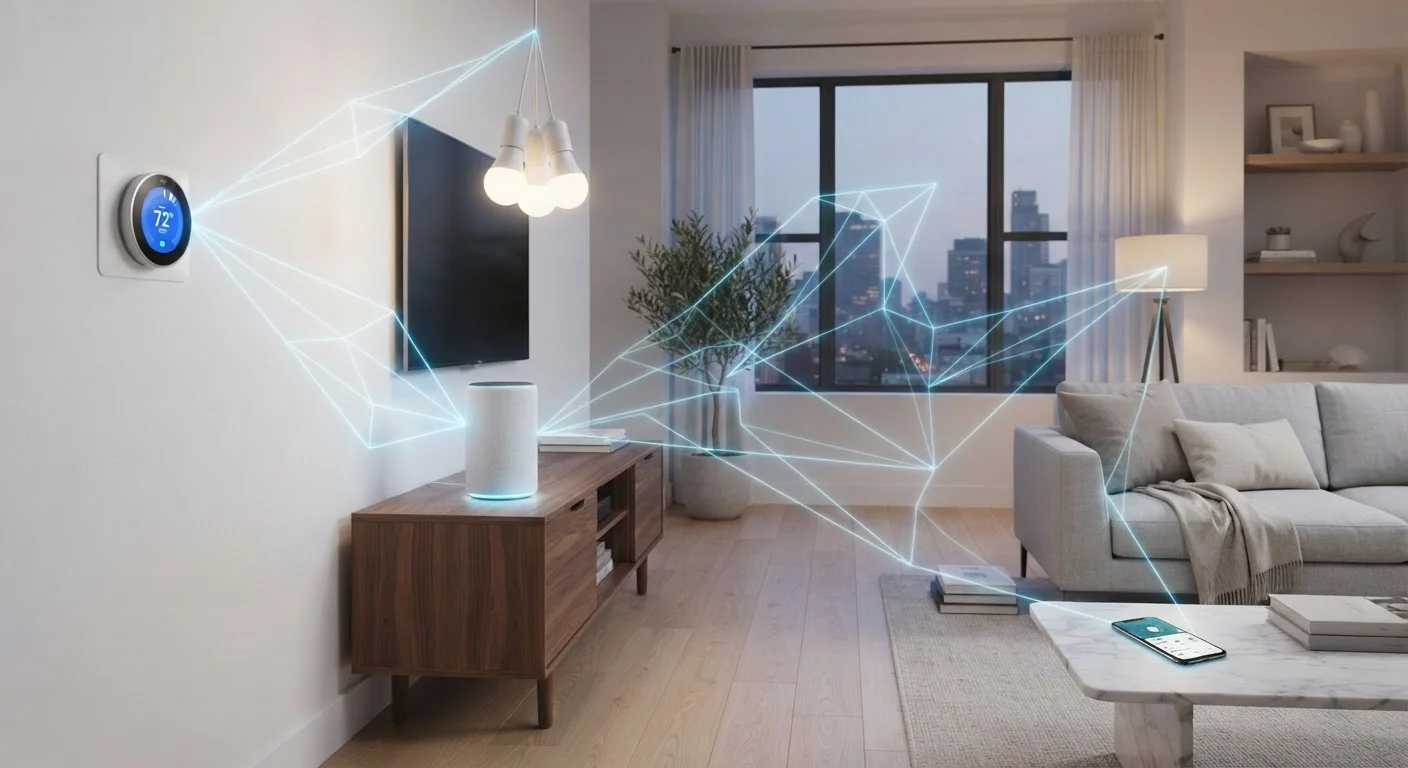
Photo: InfoAlly.net | Finding Info Made Easy editorial
Key Takeaways
- Matter is an open standard that lets smart home devices from different brands work together.
- It is backed by major tech companies including Apple, Google, Amazon, and Samsung.
- Matter-certified devices can connect to multiple ecosystems at the same time.
- Not every device category is supported by Matter yet - the standard is still expanding.
- Older devices may receive Matter support through firmware updates, but not all will qualify.
The Problem Matter Was Created to Solve
If you've ever bought a smart bulb only to discover it won't work with your existing voice assistant, or purchased a smart lock that requires its own separate app, you've experienced the core frustration that Matter was built to address. The smart home industry evolved quickly but without a shared language - each ecosystem spoke its own dialect, and devices from different brands often couldn't communicate at all.
Before Matter, buying smart home products meant committing to an ecosystem. An Amazon-focused setup might not play nicely with Apple HomeKit devices. A Zigbee sensor might not pair with a Wi-Fi thermostat without a hub in the middle. This fragmentation made the connected home feel more complicated than convenient.
Matter is the industry's formal answer to that problem. For a fuller picture of how smart home devices communicate in general, see what smart home tech actually does.
200+
Companies in the Matter alliance
The Connectivity Standards Alliance, which governs Matter, includes over 200 member companies spanning device makers, platform owners, and chipset manufacturers.
Matter 1.0
Year the first specification launched
Matter's first official specification was released in October 2022 after several years of development under its earlier working name, Project CHIP.
How Matter Actually Works
Matter is an application-layer standard - think of it as a common language that devices use to describe themselves and accept commands. When a smart plug is Matter-certified, it announces its capabilities in a way that any Matter-compatible controller (such as a smart speaker or phone app) can understand, regardless of who made either product.
The standard runs over two underlying wireless technologies: Wi-Fi for devices that need high bandwidth or are always plugged in, and Thread for battery-powered sensors and smaller devices that benefit from a low-energy mesh network. If you want to understand how those wireless protocols differ, this breakdown of wireless protocols explains each one in plain language.
A critical feature is multi-admin support: a single Matter device can be registered to more than one ecosystem at a time. Your smart thermostat could be controlled by your iPhone through Apple Home, by a Google Nest speaker, and by an Amazon Echo - simultaneously, without any workaround.
Look for the Matter badge when shopping
What Matter Means in Practice
For everyday homeowners, Matter's most immediate benefit is freedom of choice. When shopping for a smart light or sensor, you no longer have to verify whether it matches your specific hub or voice assistant - if both your device and your controller are Matter-certified, they should work together.
Another practical benefit is local control. Matter is designed so that commands between devices on your home network don't necessarily need to travel to a manufacturer's cloud server and back. This means your smart lock can still respond to commands during an internet outage, a reliability improvement that purely cloud-dependent setups cannot offer.
If you're just starting to build a connected home and want a solid foundation before diving into standards like Matter, a homeowner's starting point for smart home tech is a good place to begin.
Current Limits and What to Watch For
Matter is a significant step forward, but it's not a complete solution yet. The standard continues to expand its list of supported device categories with each specification update, so some product types - such as robot vacuums or certain security cameras - have had limited or no support in earlier versions.
Compatibility also depends on which version of the Matter specification a device and a controller each support. A newer device feature may not be accessible through an older controller app that hasn't been updated yet.
Firmware updates may bring Matter to some existing devices
Finally, while Matter reduces ecosystem lock-in, it doesn't eliminate all setup complexity. You still need a Matter controller (a smart speaker, hub, or phone app that acts as the command center) and, for Thread devices, a border router. Many modern smart home hubs already fill this role - what smart home hubs actually do explains when one is genuinely useful. If you experience ongoing connectivity issues, understanding why smart homes drop connections can help you diagnose the root cause.
Frequently Asked Questions
The content on this site is for informational purposes only and is not a substitute for professional advice. Always consult a qualified professional for guidance specific to your situation.